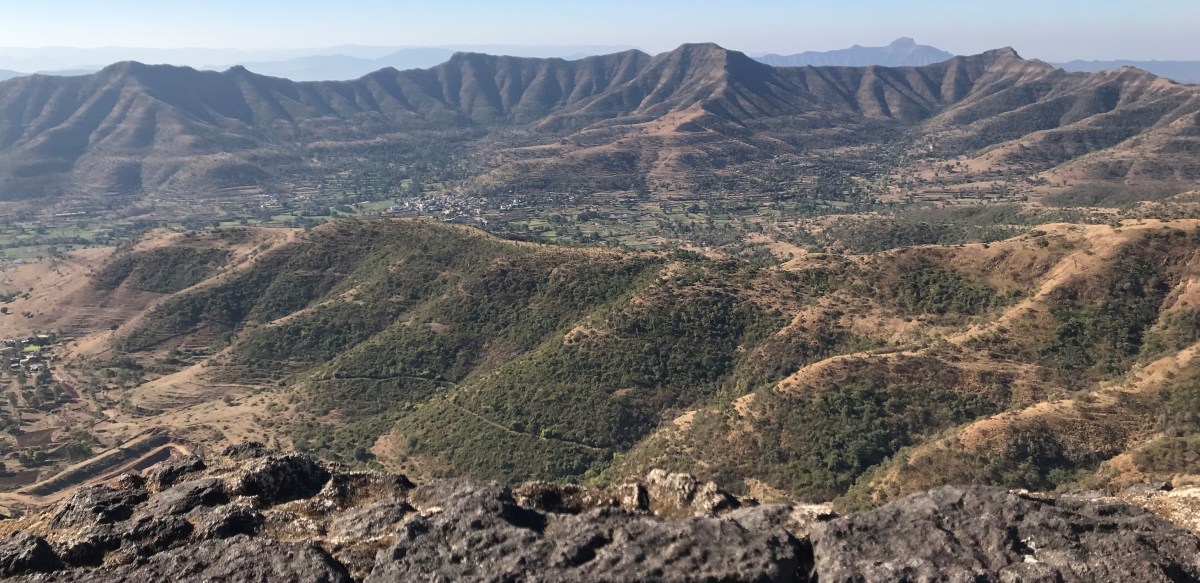
India’s craggy, mountainous centreland, Maharashtra has been populated for millennia. Home to multiple UNESCO World Heritage Sites, there’s breathtaking evidence here of human life across the centuries.
Maharashtra is shaped by its hills, or Ghats, and these are dotted with caves and forts up high and villages and cities down below. Caves, carved out of living rock, formed an important part of monastic life here and the forts bear witness to the importance of the trade routes through the state, as well as the ambitions of many rulers.
The state is carved into different regions by these Ghats, and the vegetation reflects this. The Western Ghats, from the mountain range to the coast, are lush with jungle, as the far East of the state. Crossing the centre by train the vegetation becomes more scrubby, clinging to hills and battling against the unrelenting sun.
The food here reflects the climate, again dictated by the Ghats. While the vegetative West has coconut at the heart of its food, the vast central areas are more austere in their styles. Great care is taken over the ingredients used and food is treated well to retain the nutritional value. One example is that food here is rarely deep-fried. Food in Maharashtra is often deep red, choicely spiced, and fiery, laced with chilli.
The identity of the Marathi people was consolidated during the time of Chhatrapati Shivaji Maharaj, who lived between 1630 – 1680. He solidified the area into a unified state by establishing the Maratha Empire. Accordingly, he’s revered across the state.
Jump to:
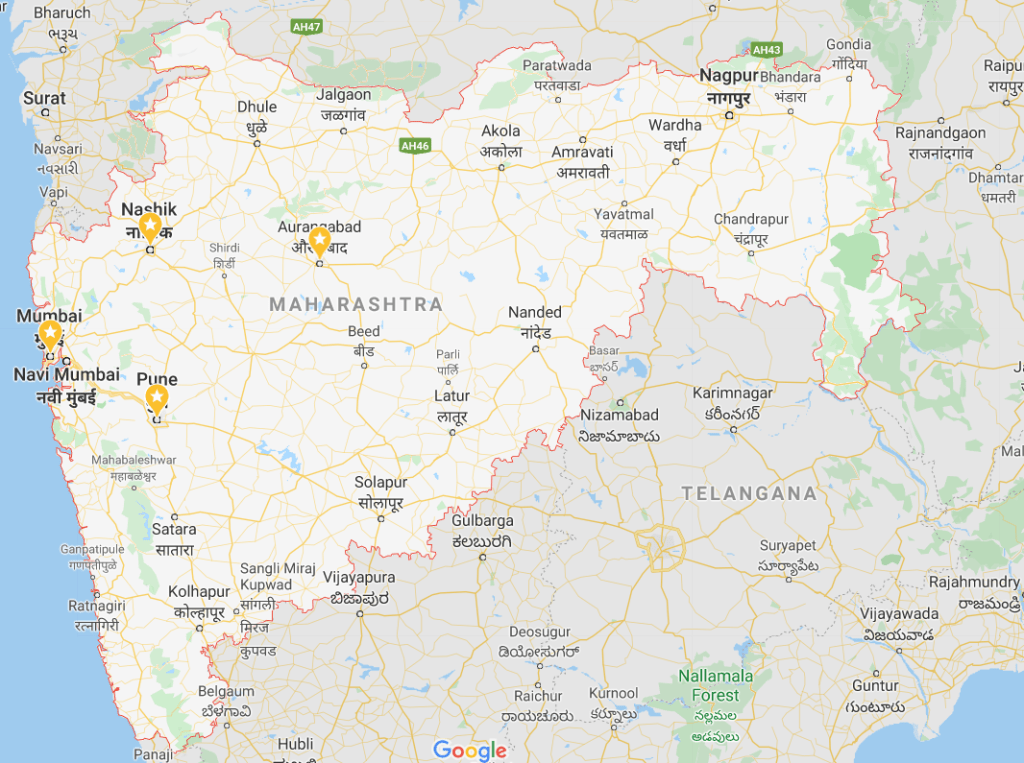
Where we went
Jump to:
Nashik
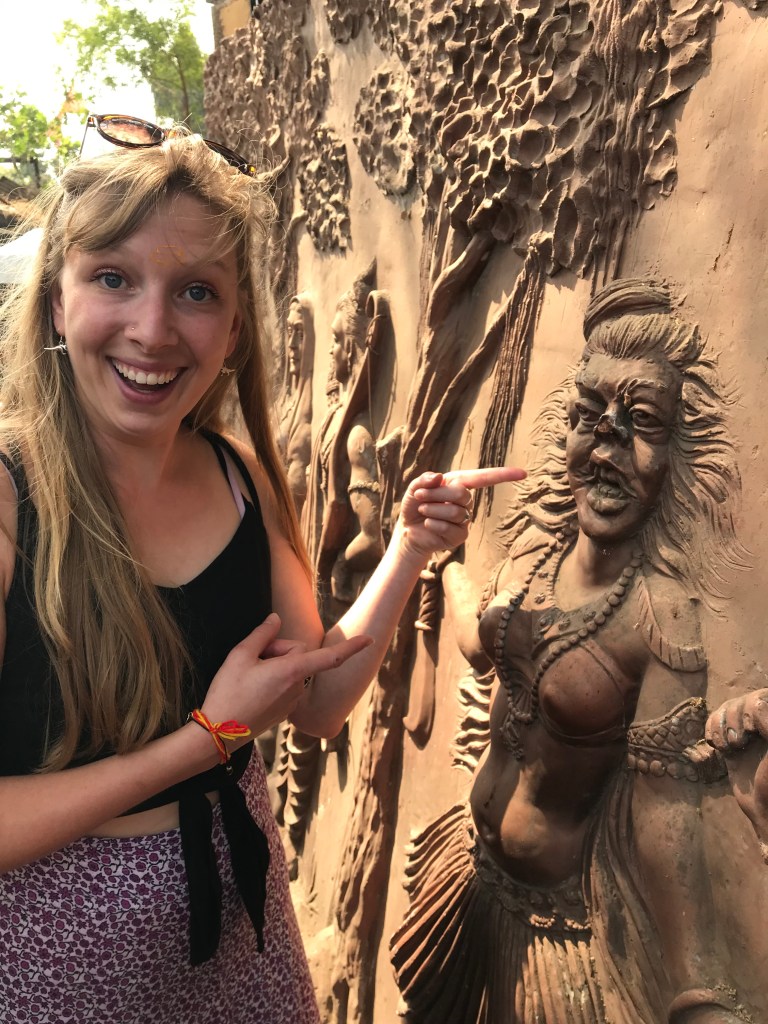
Spirituality is close to the heart of all Indian life and this is even more noticeable in Nashik. One of the destinations for Kumbh Mela, the largest gathering of people on the planet (60 million in 2013!), it’s got a storied religious history and temples line every street. One such story runs that it was here that Lakshman, the brother of Rama (the avatar of Vishnu, one of the big time gods) cut off the nose of Shurpanakha for attacking Sita, Rama’s wife. Hence why the town is named Nashik, or nose in Sanskrit.
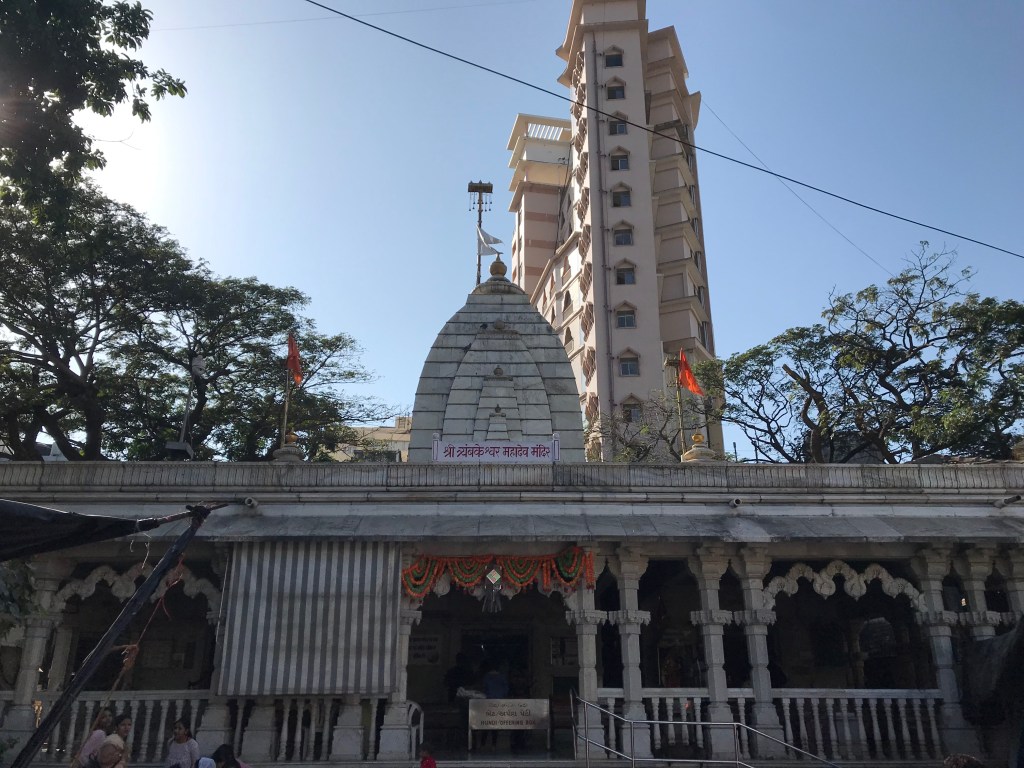
The old quarter has some interesting sights, including the ghats where people bathe, both in day to day life and at the Kumbh Mela. It’s also got some cool architecture and some of the most sacred and beautiful temples in the city. One of the most important temples here is the Kalaram Temple, supposedly the exact site where the nose cutting happened!
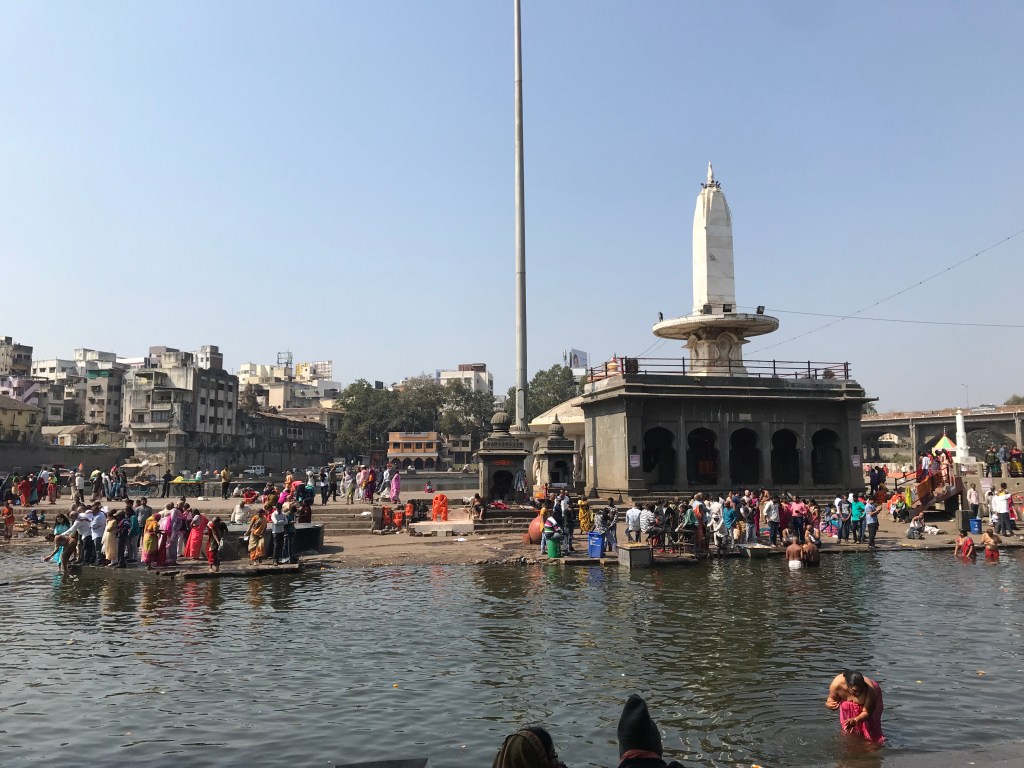
The famous ghats.
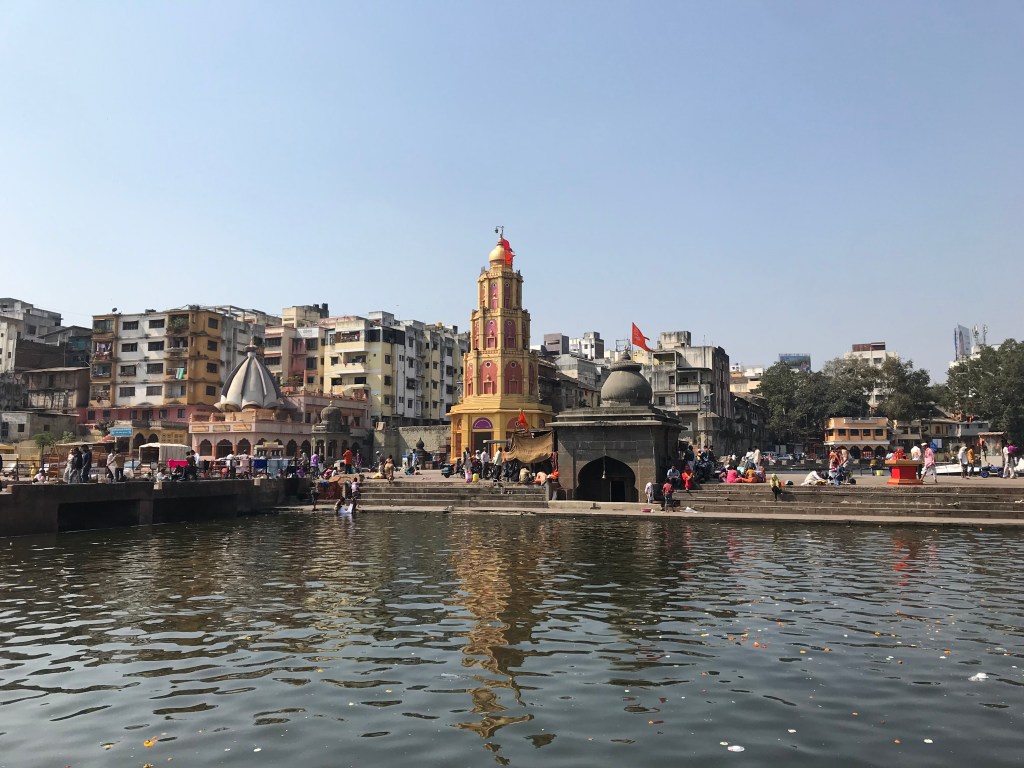
Nashik is also now the central city in India’s premier wine producing region, so it goes without saying that we’d end up here. There’s several vineyards around the area and it’s the beginning of a fascinating new chapter for a city with such an old heritage.
However, despite all of this, it isn’t very well set up for visitors, not having a huge choice in either restaurants or accommodation. While this is sure to keep improving as the wine industry takes off, at the moment it remains an interesting town but not one to spend reams of time in.
SulaFest
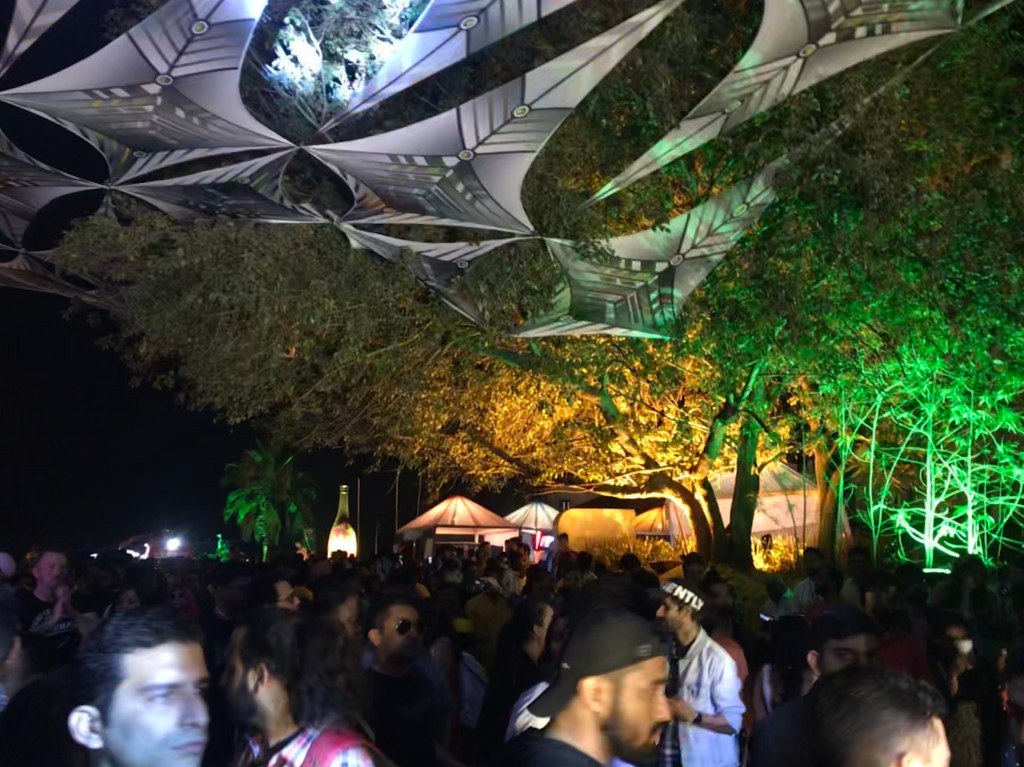
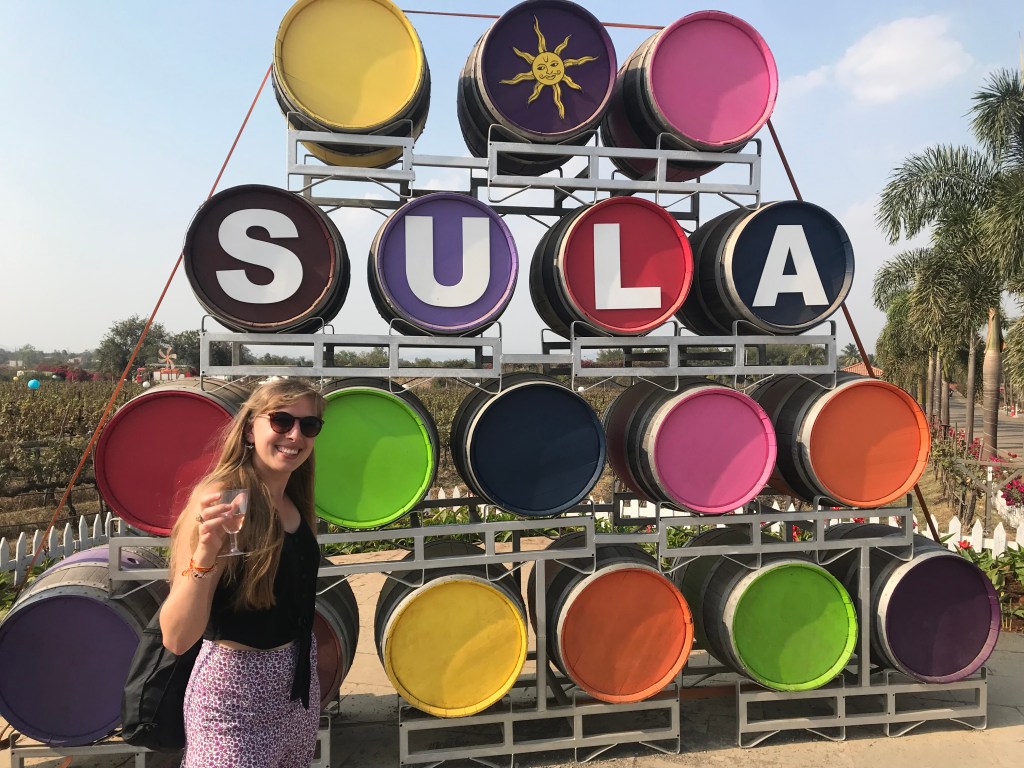
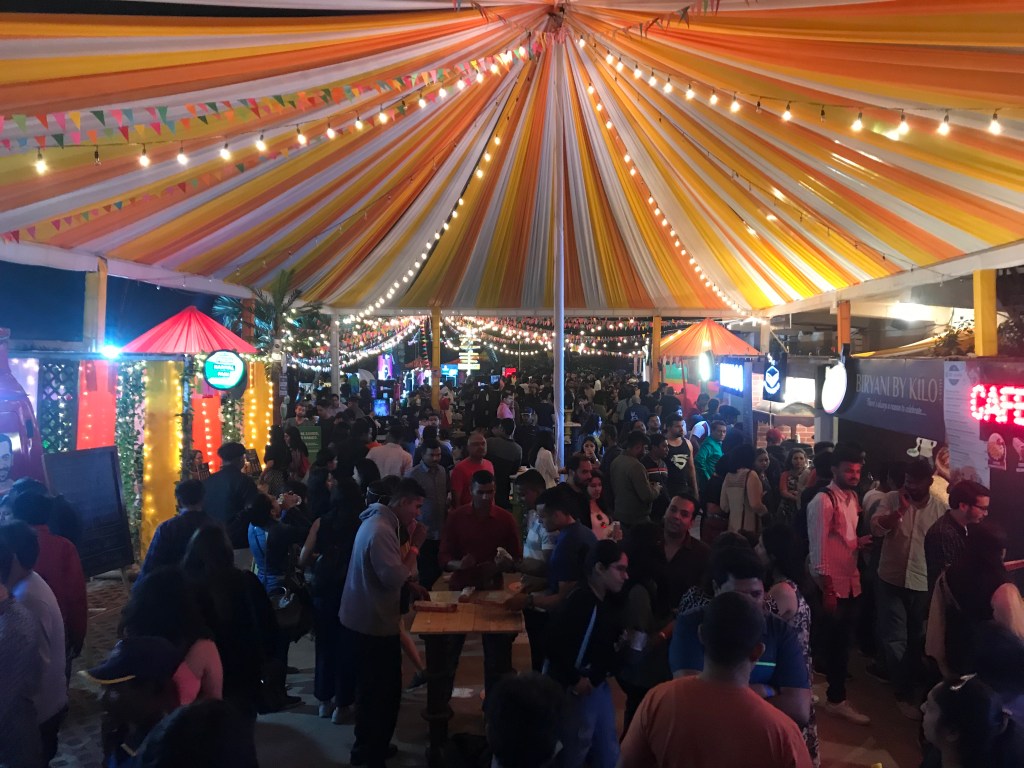
For one weekend a year Sula Vineyards open their doors and fields to host one of India’s best boutique music festivals, SulaFest. There’s no Glastonbury weather worries here, just guaranteed sunshine and free flowing wine. We were very excited to be able to make it!
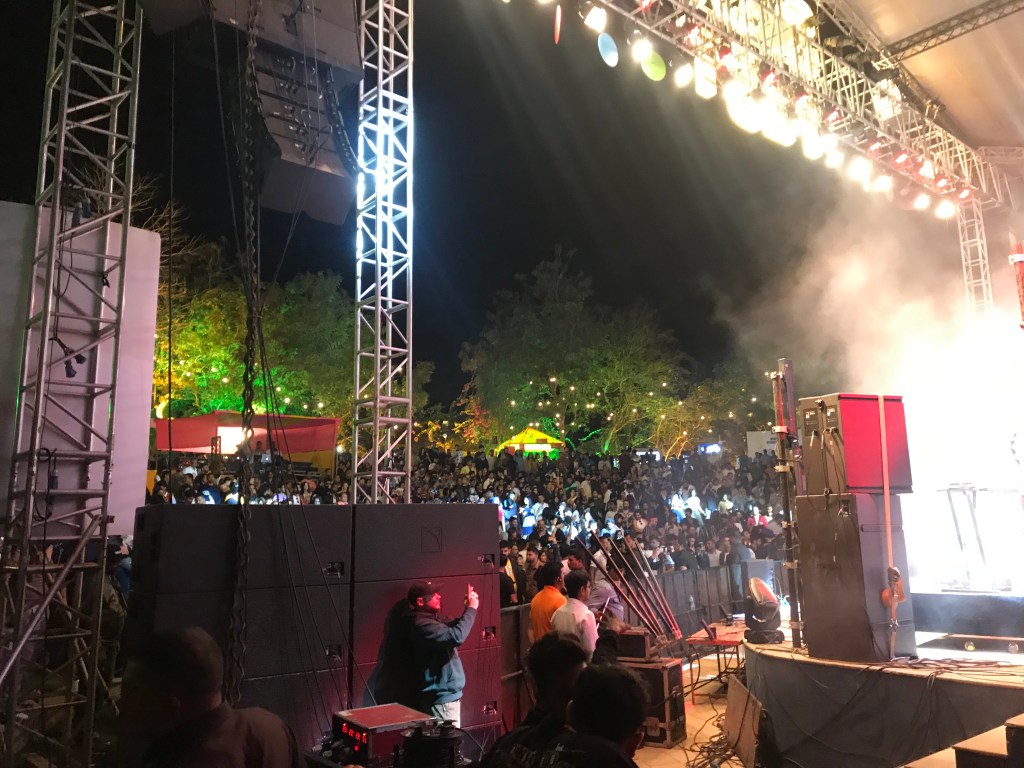
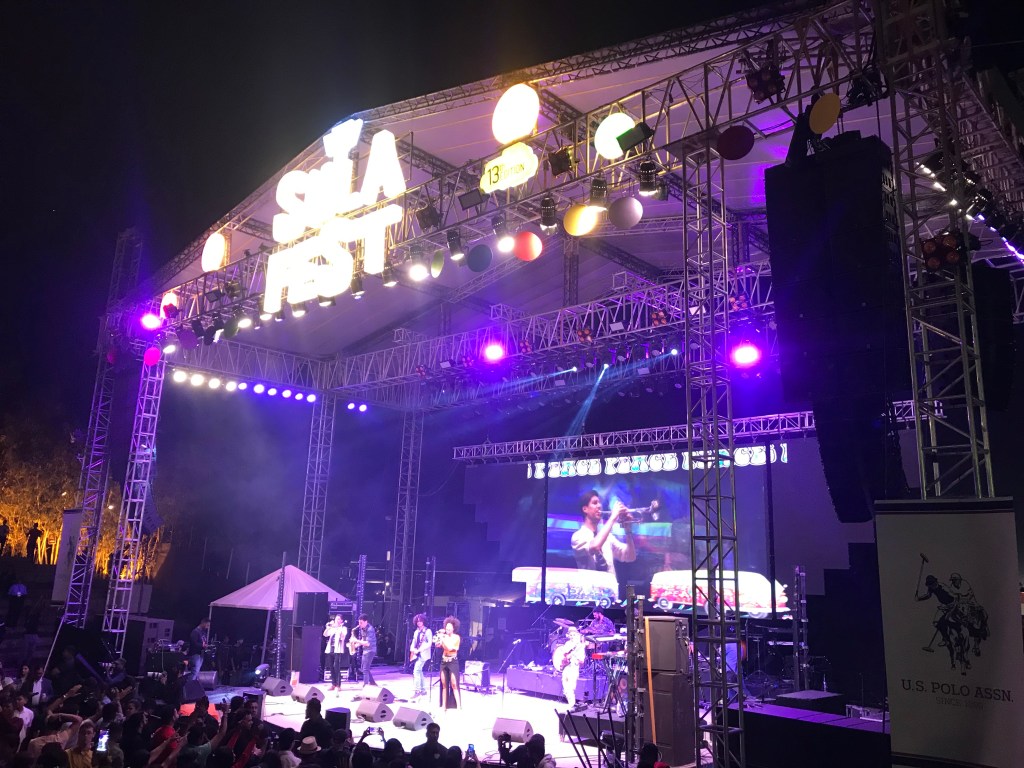
The music, across two stages, is varied and accomplished. This year’s headliners were UK based Hot Chip.

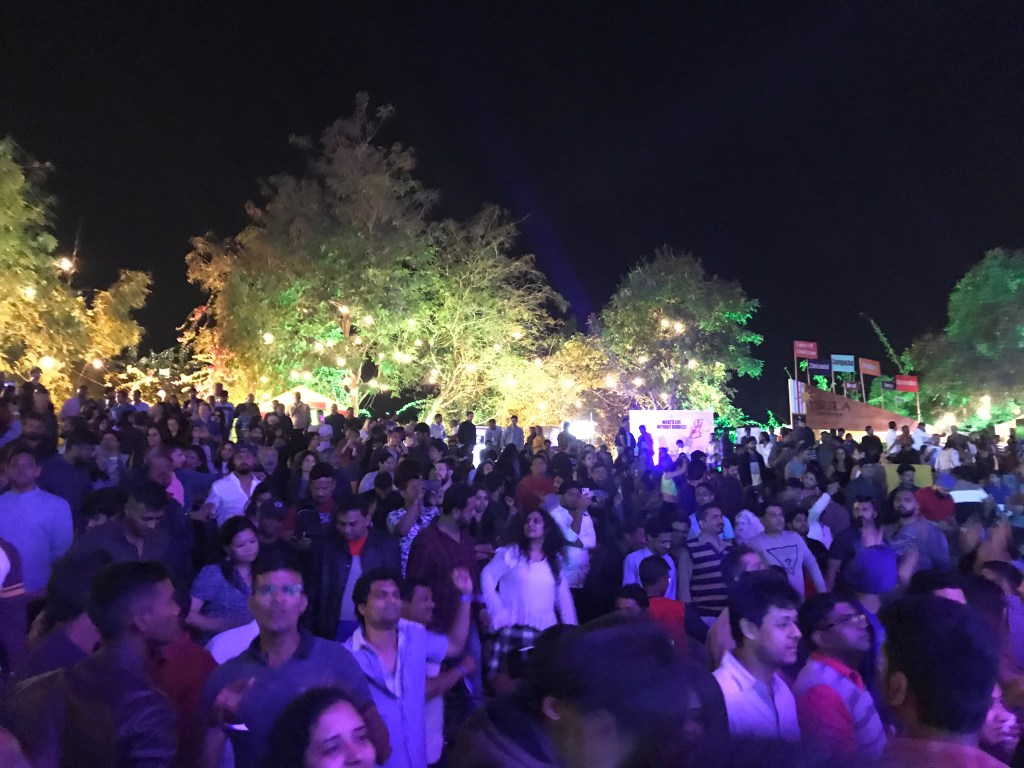
The rest of the acts on the main stage spanned genres such as soul, folk, and Funk, with acts from across both Asia and Europe. The main stage was set in an amphitheatre, great for both chilled appreciation of the music and dancing revelry.
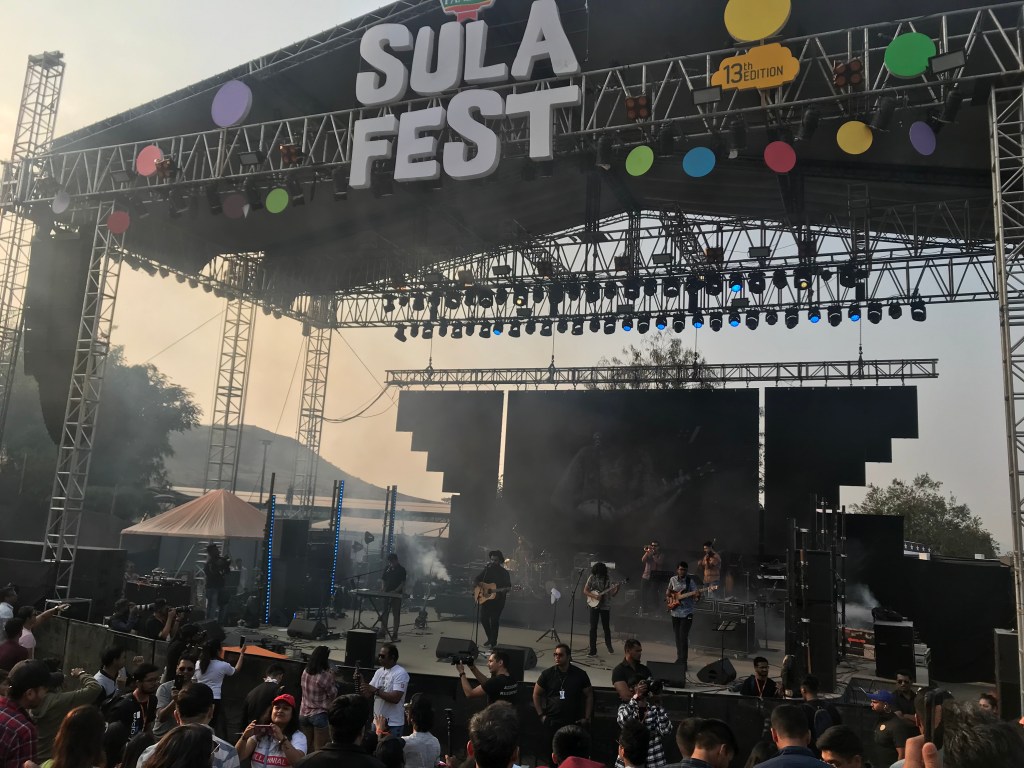
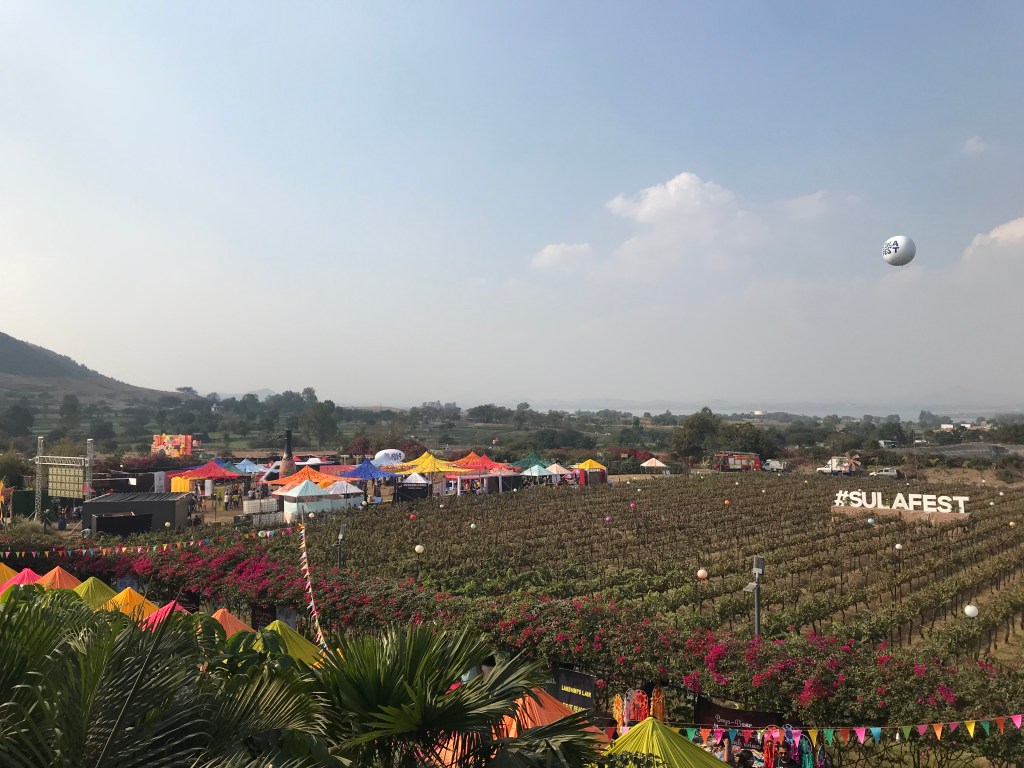
The second stage was trance focused, following India’s love affair with the genre. Food offerings were good, spanning multiple cuisines.
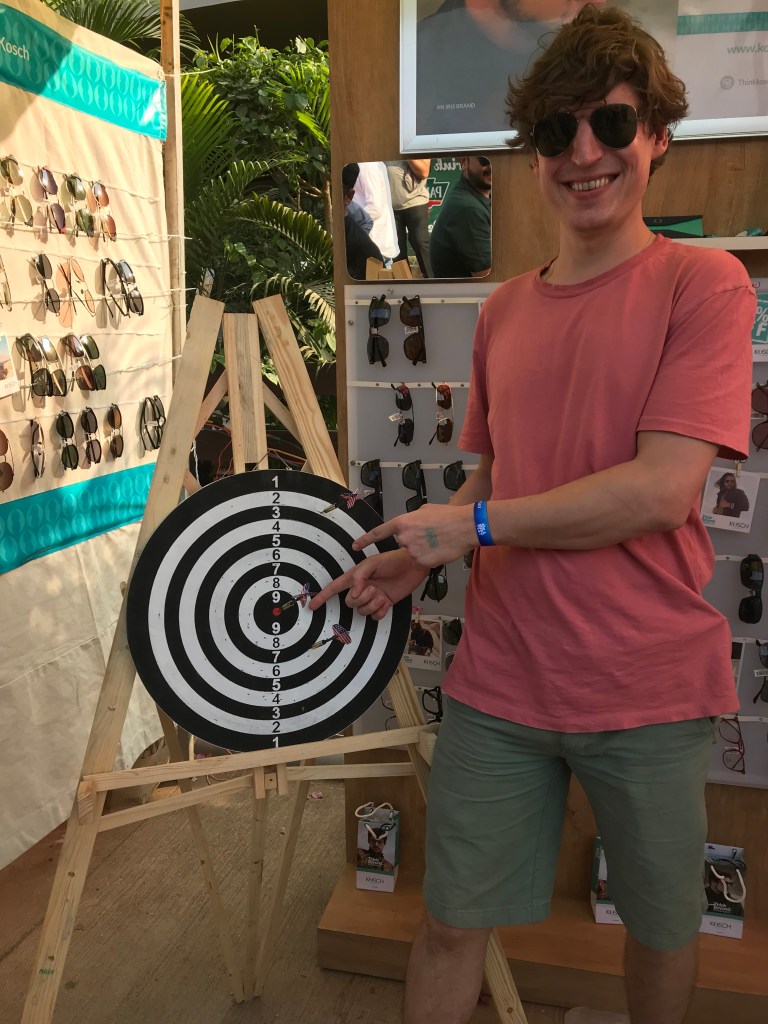
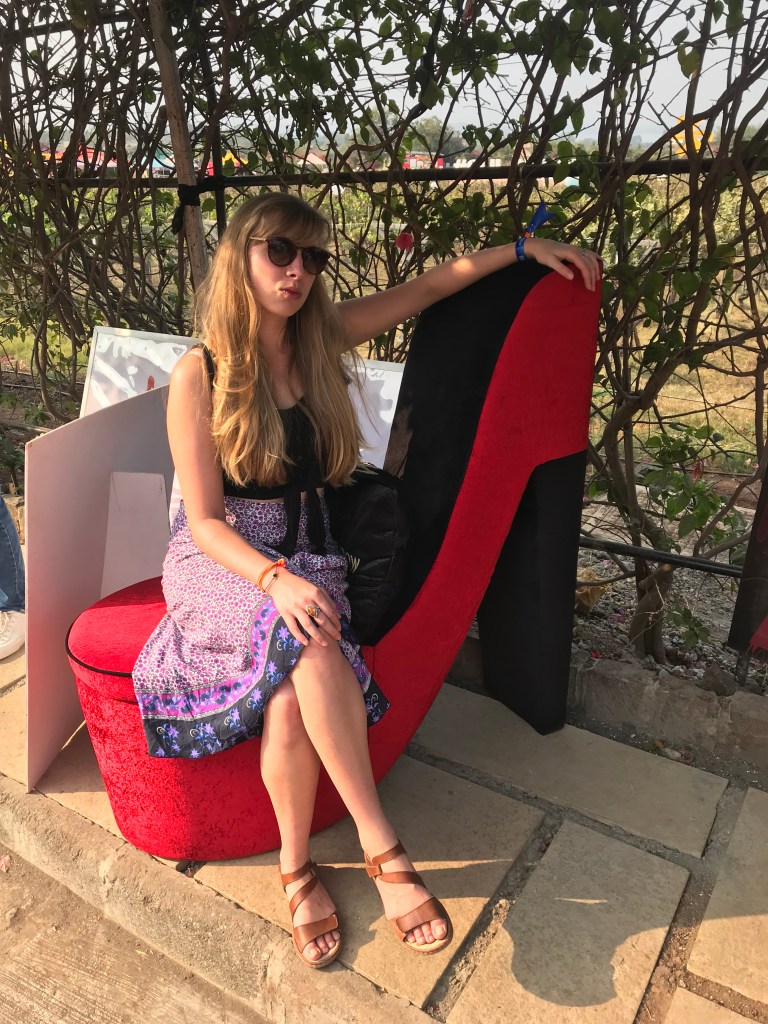
Working my way through the wine, I got very drunk as you may imagine! Lots of dancing, conversations had on memory foam mattresses, and a pair of sunglasses half price for hitting a bullseye, it’s definitely got a festival vibe!
A small but well formed festival, celebrating both music and wine.
The wine
Sula have been around since the beginning of India’s wine revolution, including planting the countries first Sauvignon Blanc vines. They’ve grown to offering a selection across all 4 key corners: red, white, rosé, and sparkling.
The white is the best of the bunch, with good flavours and levels of acidity. While lacking a bit of depth and a touch of balance, all their whites are pretty strong. It follows that their sparkling wine, with the one offering, is pretty good too. It’s pretty sweet, following in Prosecco’s footsteps rather than Cava or Champagne.
The red wines suffer a bit more from the lack of depth, red being a style that traditionally suits deep, earthy wines. Like most new-world wines the reds are fruit led and, again, have some good flavours. The reds are often served chilled, which plays to both their strengths and the Indian heat. I unfortunately didn’t get to try the rose as while I was working my way through the 12 wines at the festival the rosé sold out, being the last category on the list!
Sula have worked hard to dominate the wine market in Maharastra, with their wines and branding obvious in many establishments. However, they are not the only brand and so I’m working on trying some of the others where available.
What if we had more time?
As I said, there’s not leagues of things to do in Nashik, short of drinking more wine. If we’d had a couple more days I would have done a vineyard tour (or two!), to see them when they’re not decked out in festival attire. There’s a few wineries to choose from and I would have loved to spend a long afternoon at some of them. Grover are particularly well lauded and so if I had to choose one then I’d go to theirs.
Aurangabad
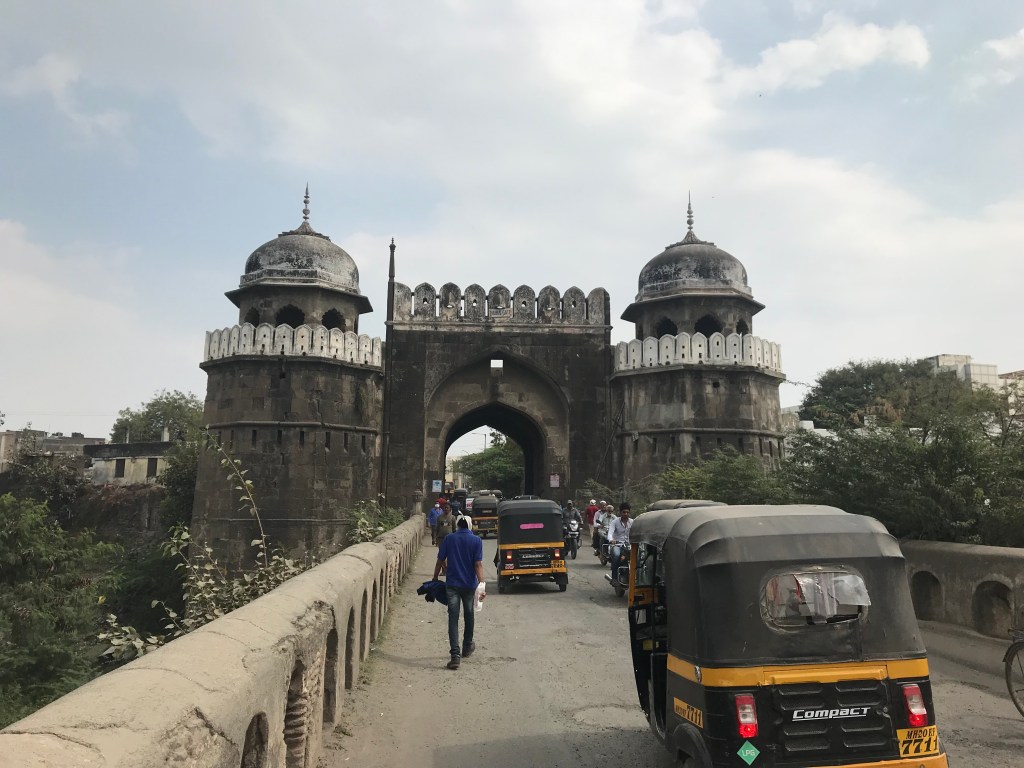
On the surface, there’s nothing much setting this city apart except the nearby attractions. However, dig a little deeper and you’ll find more and more evidence of this city’s history and the fact that it was once a capital. The four huge gates facing important destinations is a start, marking the old walls of the city and roughly the four cardinal directions.
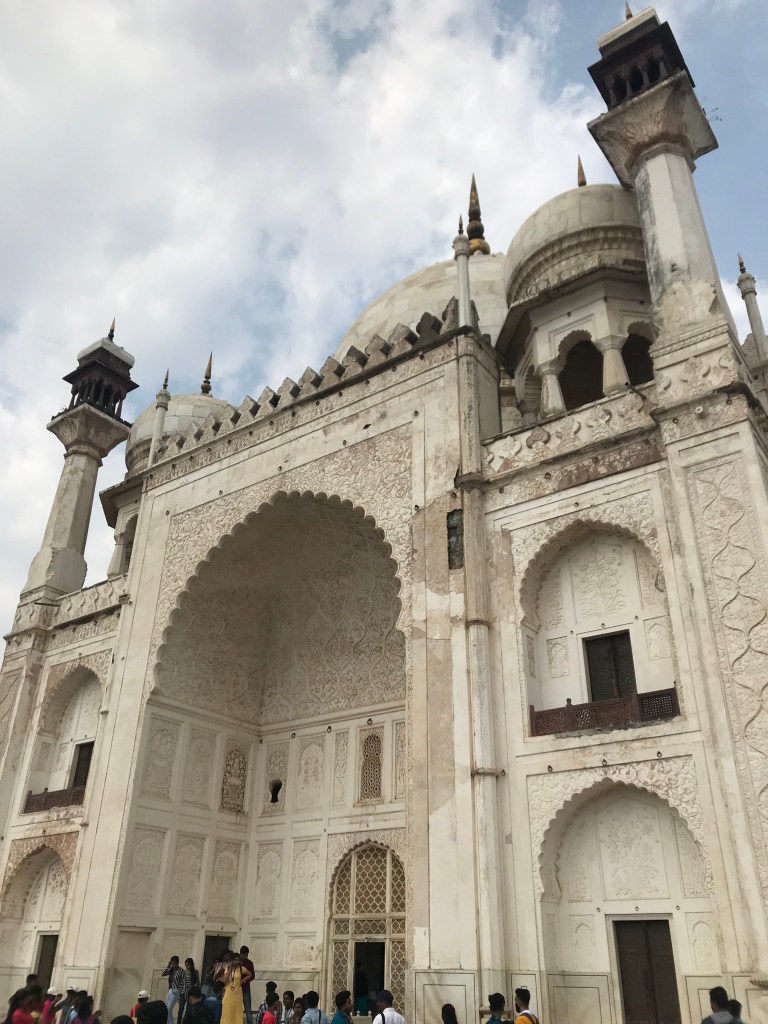
It’s also home to the Bibi Ka Maqbara, or ‘mini taj’, a mausoleum built by the Mughal emperor Aurangzeb to honour his first wife. It bears a very strong resemblance to the Taj Mahal. I’ve not been to the Taj yet but Megan says it’s funny as it’s so similar but so much smaller and less impressive. For one, it’s not made of marble as Aurangzeb didn’t want to drain the empires coffers. Interestingly, Aurangzeb’s mother is entombed in the Taj Mahal, which was built by his father who clearly didn’t have similar worries!
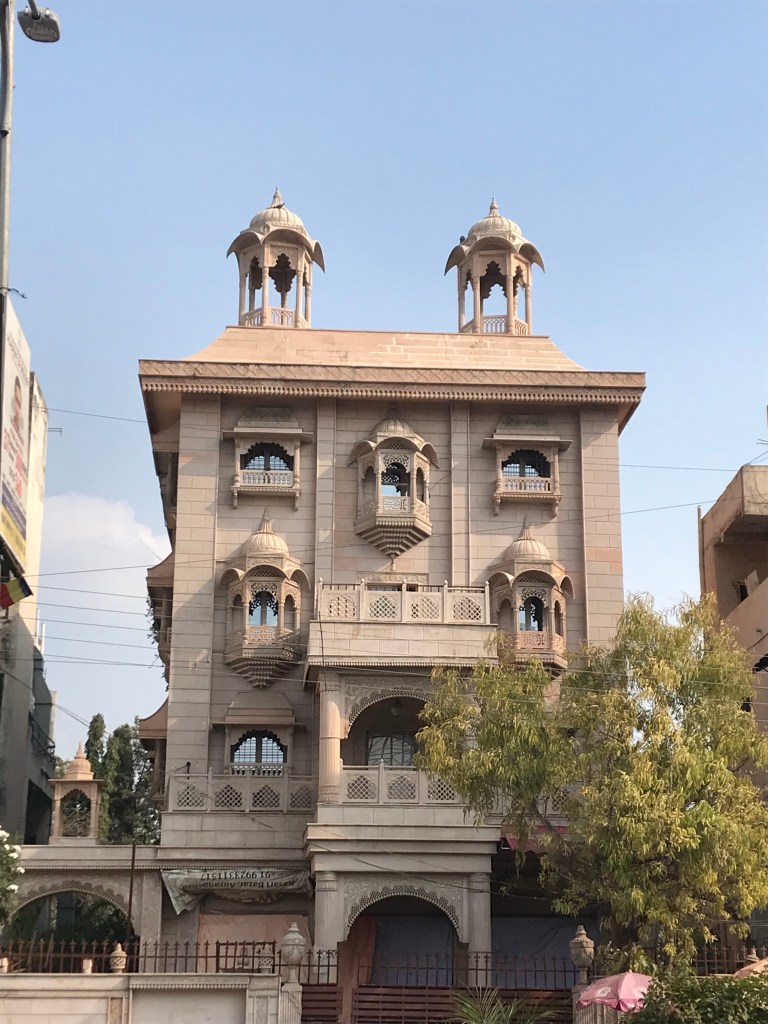
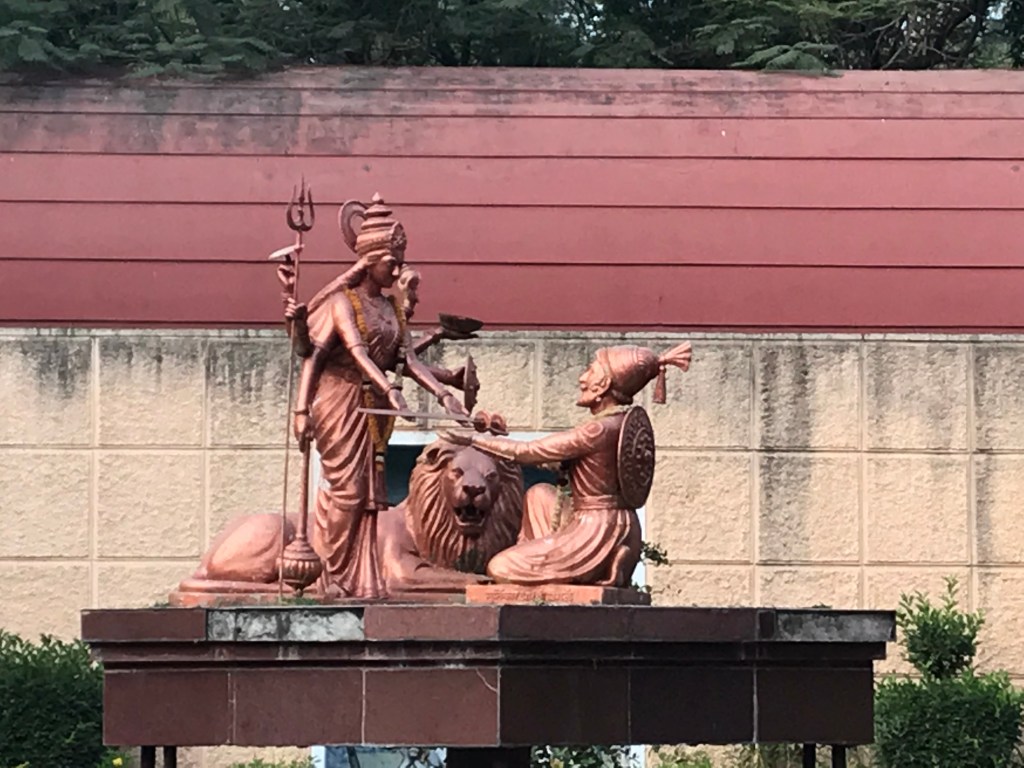
There’s also some beautiful architecture nestled in amongst the more general buildings and a great little museum dedicated to Chhatrapati Shivaji Maharaj, the founder of the Marathi empire.
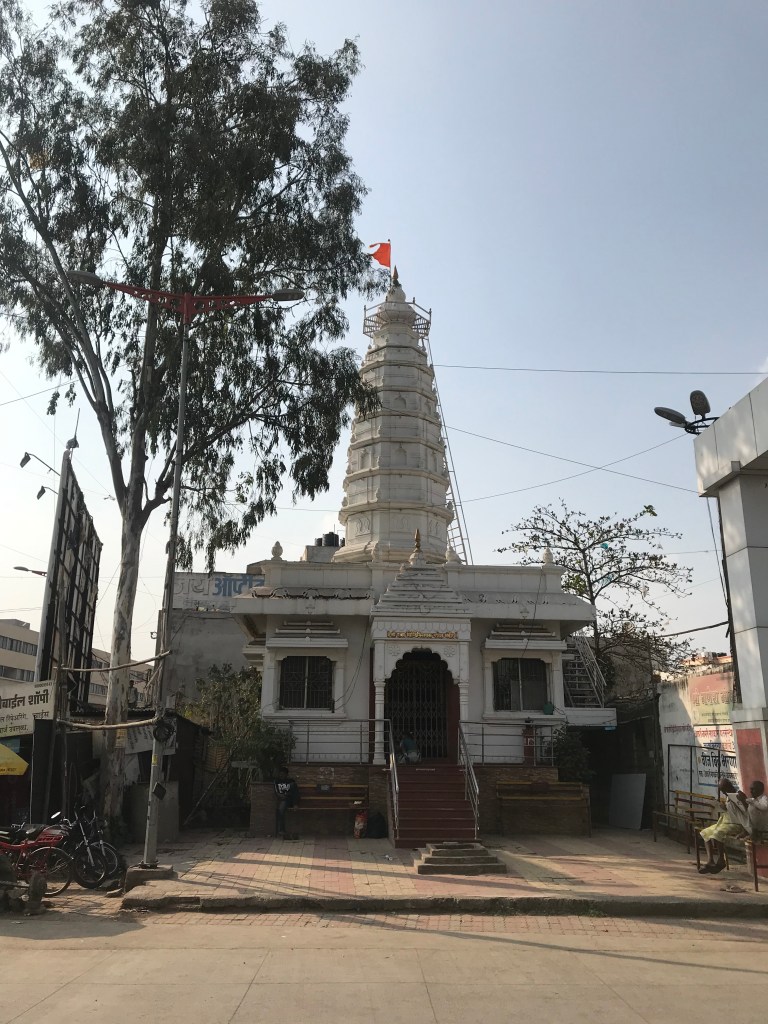
The city also has a strong food scene, including it’s very own signature dish the Naan Khaliya. This is a dish designed to feed armies, fitting with Aurangabad’s military history. The naans are cooked in a tandoor and the Khaliya is a mutton dish, in a fairly thin dark brown gravy, laced with nuts and spices.
It’s also home to Bhoj, which serves an absolutely stunning thali, full of spice, flavour, and theatre. It was the best thali we’ve had in Maharashtra, beating even Mumbai’s offerings.
Some of our other favourite restaurants included:
- Tandoor – A strange Egyptian decor gives way to a traditional Indian eatery, focusing on high quality tandoor and tikka cooking. Their malai kofta is also excellent.
- Hotel Panchavati Restaurant – This small, unassuming restaurant in the hotel we were staying in was regularly packed and made some really excellent Maharastrian dishes.
- Green Leaf – This restaurant is based near Cannought Garden and has a lovely setting outside, decked with lights and a beautiful garden next to it. They also make exceptional vegetarian cuisine full of flavour. The paneer lababdar is delicious.
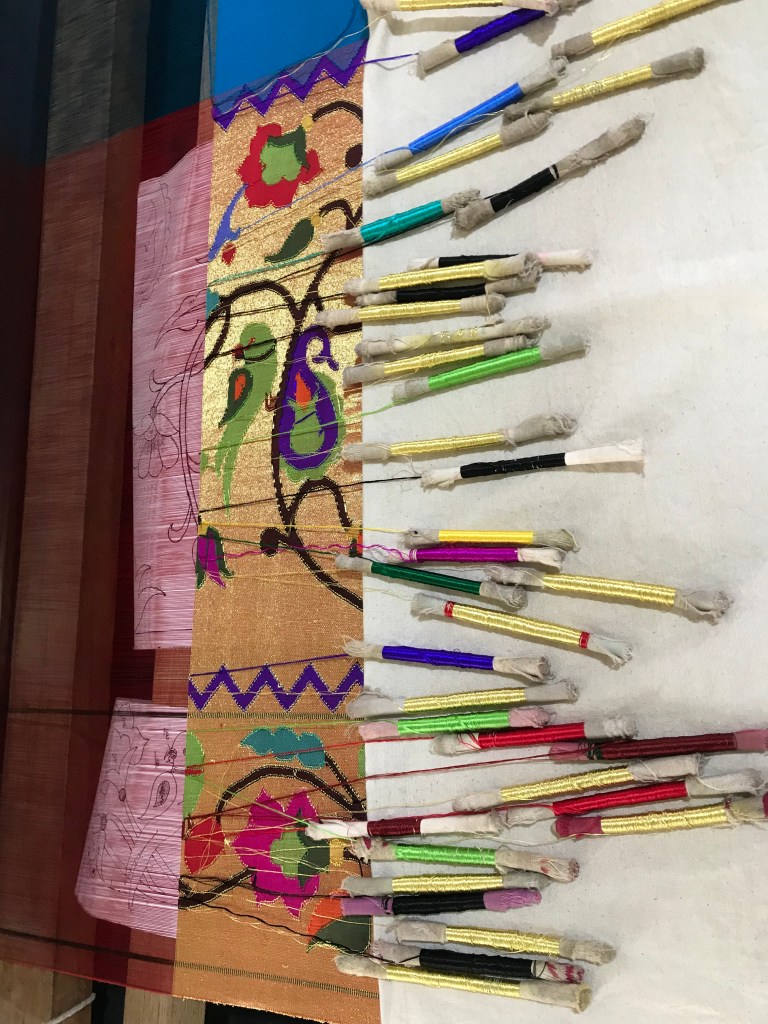
Aurangabad also has a strong heritage in weaving, being home to a couple of unique weaving styles from the time when nearby Daultabad was a capital. These include Himroo, a blend of silk and cotton with one of the weft and the other on the weave, and Paithani, which is silk woven with gold thread.
The East of the city, around Cannought Garden, has a refreshingly cosmopolitan vibe and can act as an oasis against what can be a bit of an oppressive city in other areas.
Ellora
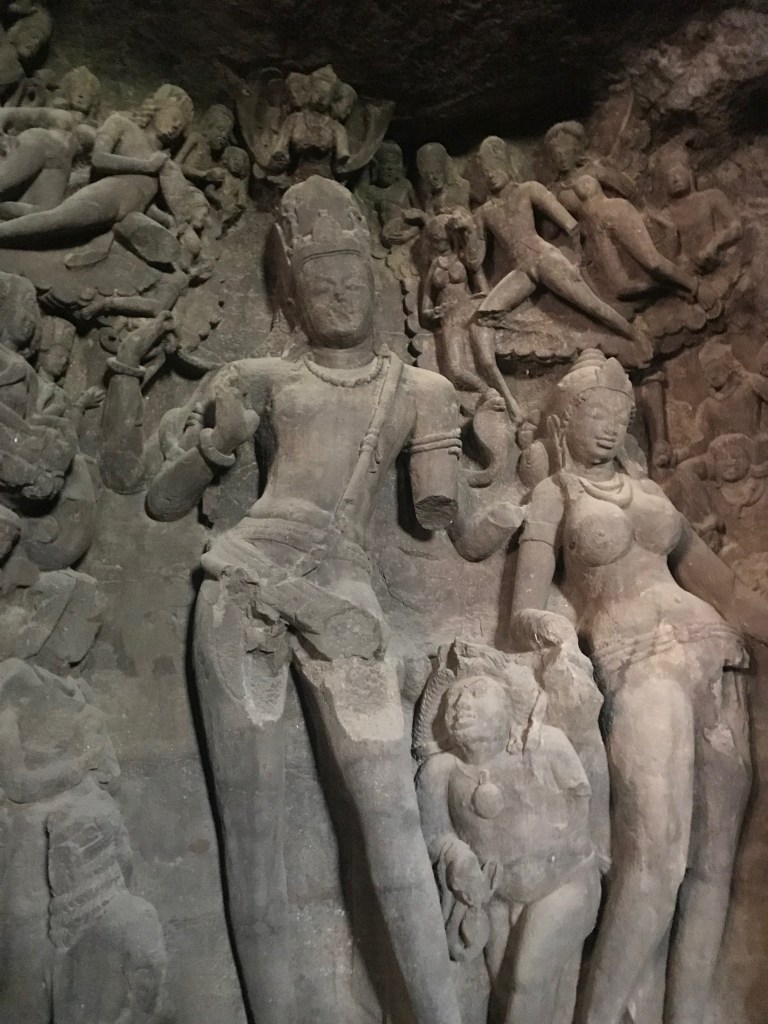
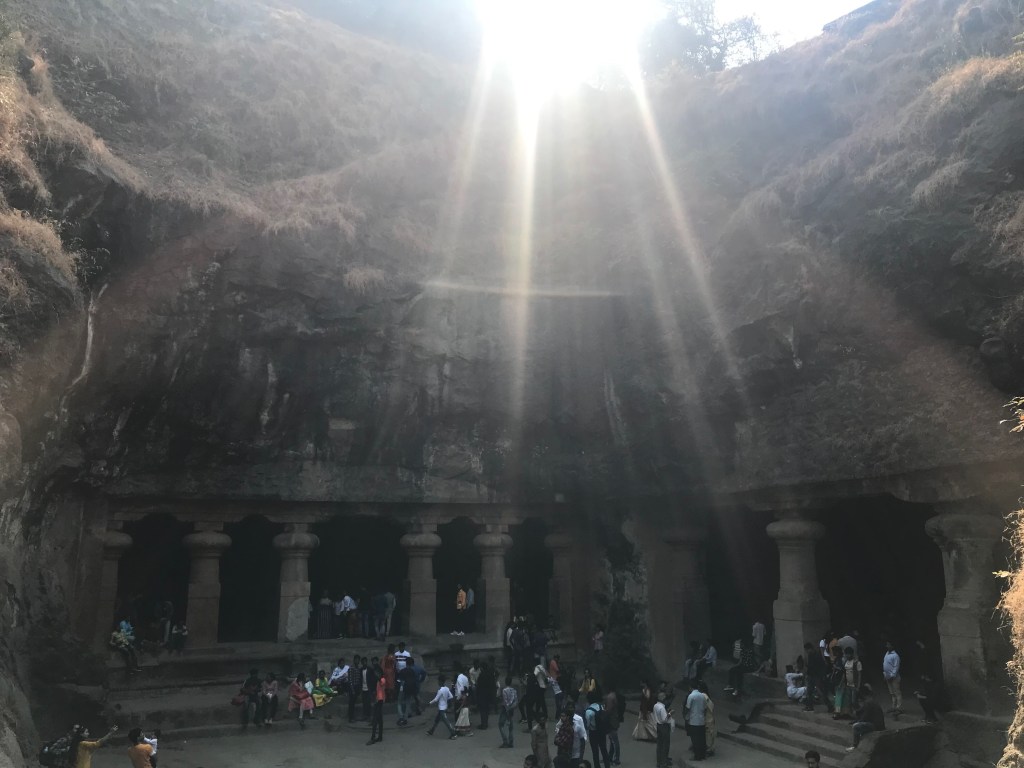
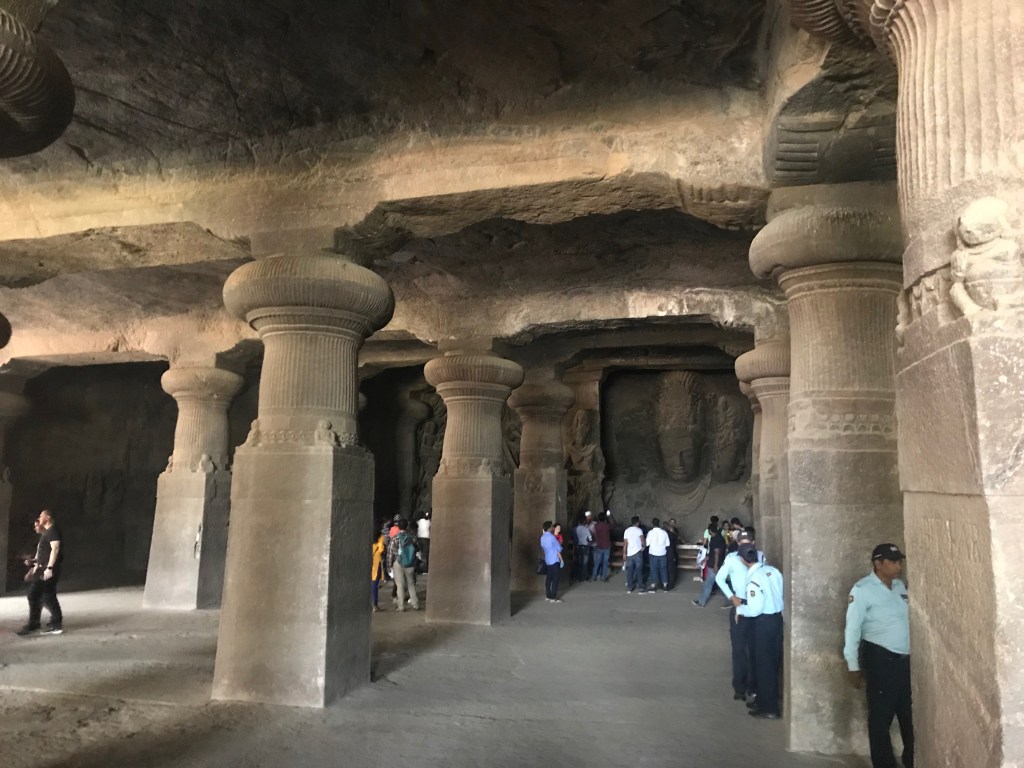
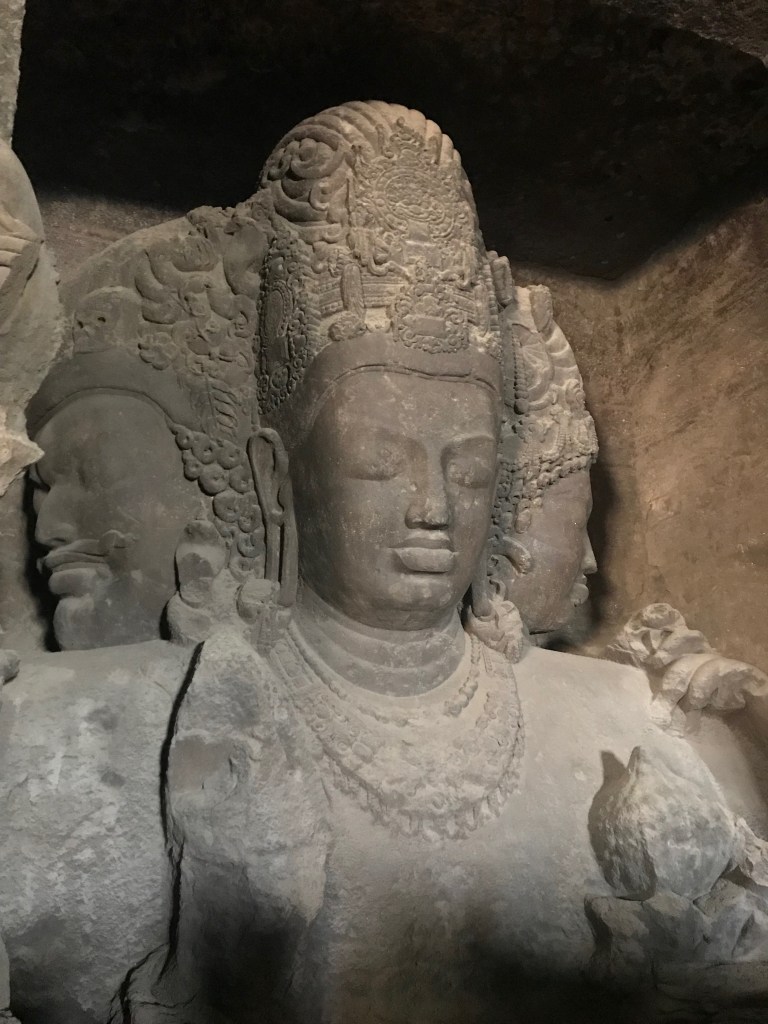
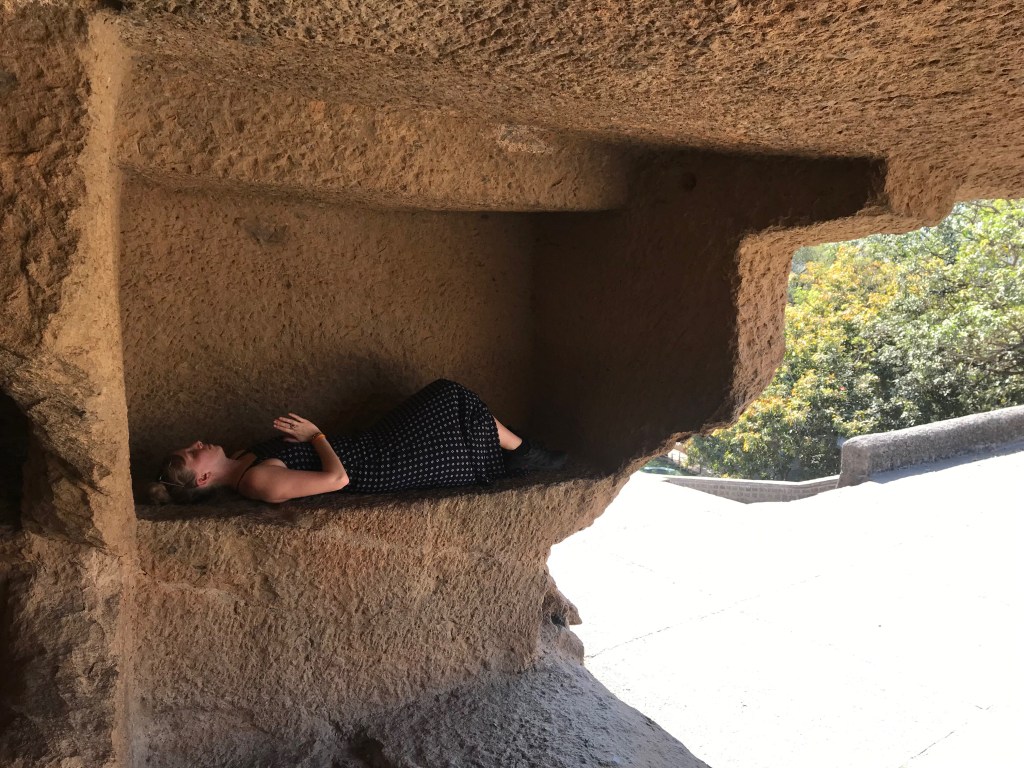
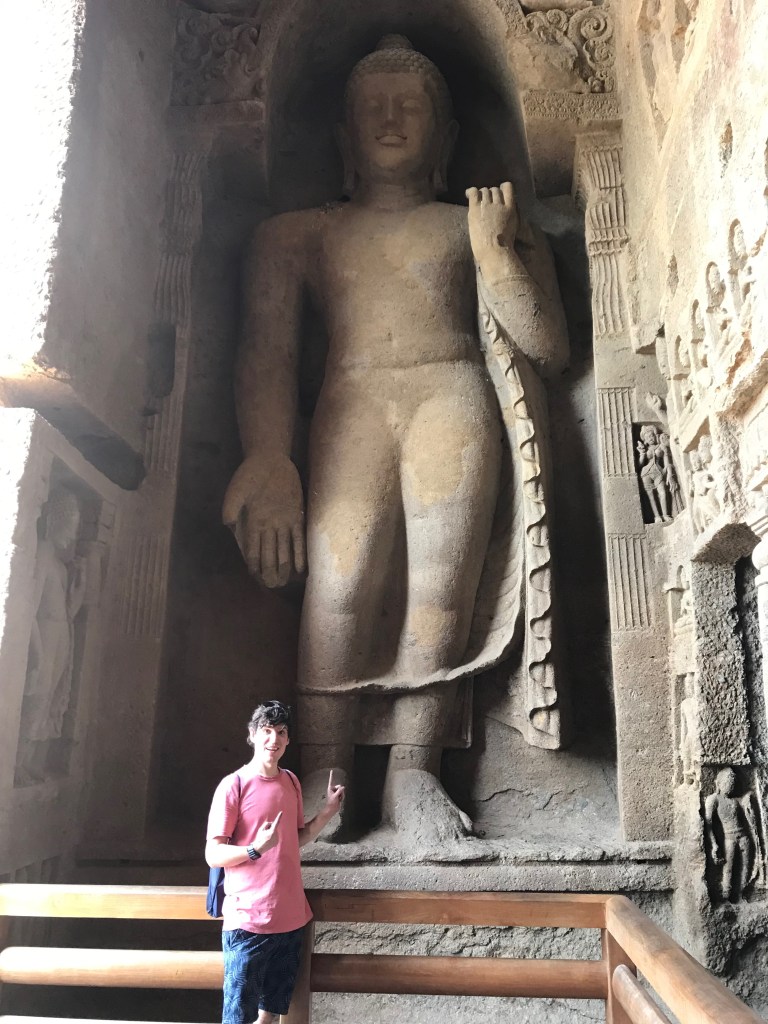
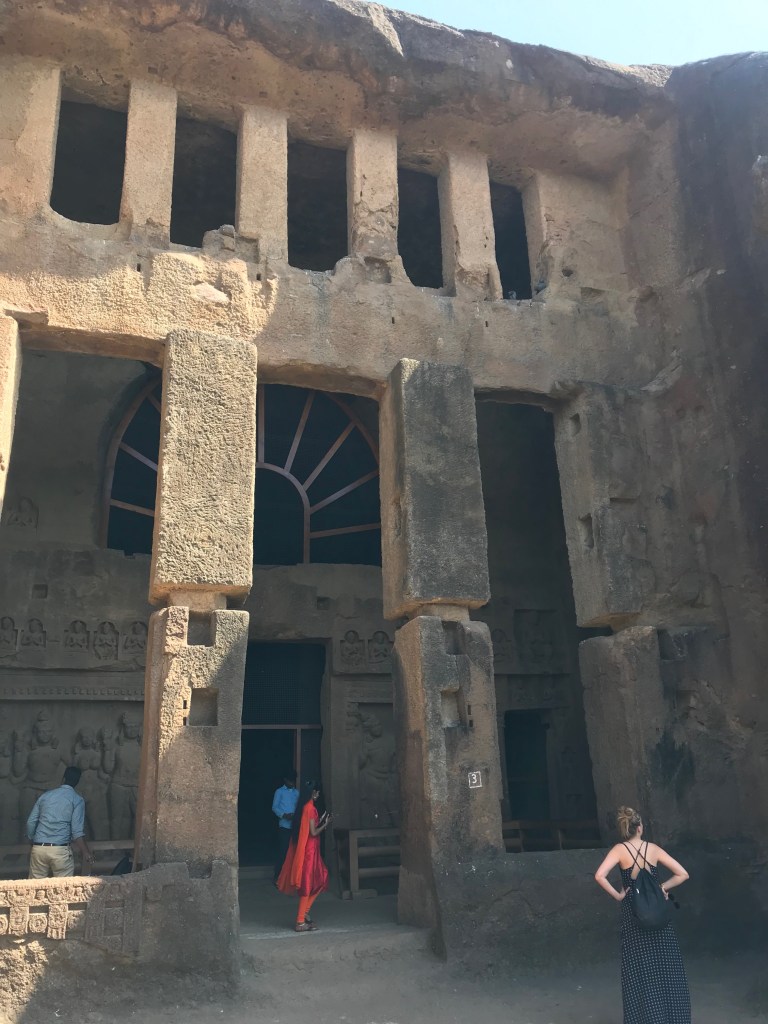
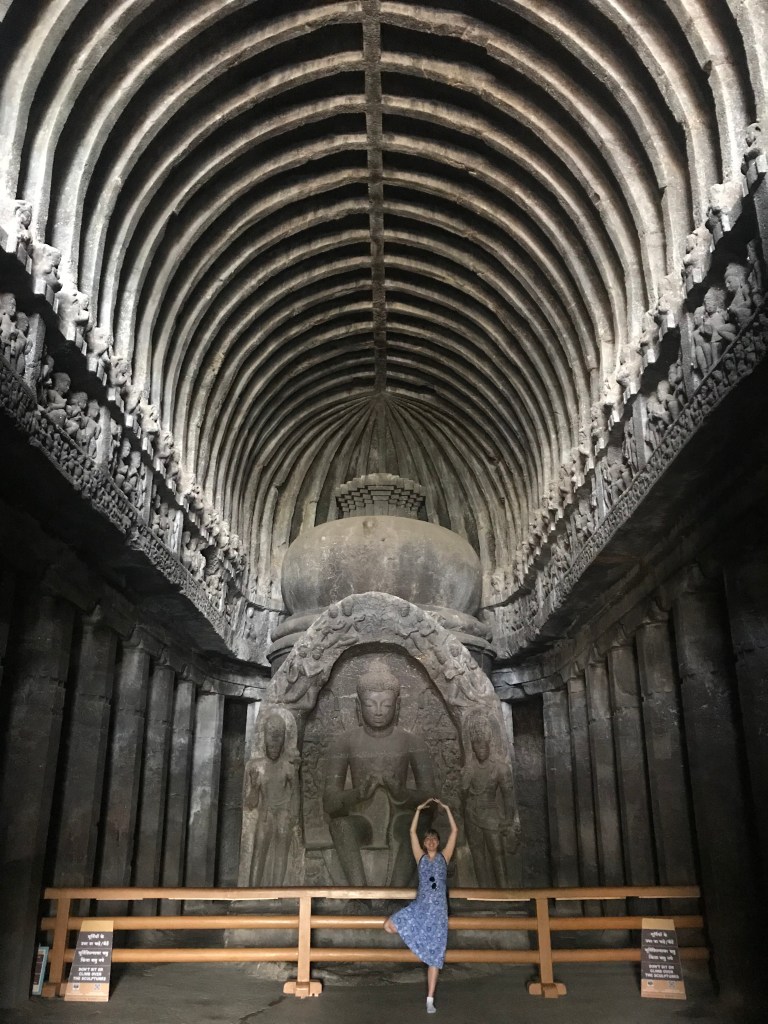
The caves at Ellora are a stunning insight into the mastery of carving and the way of life for monks between the 7th – 11th centuries CE. It’s also interesting as it’s home to Buddhist, Hindu, and Jain caves. There’s some marvelous sculptures throughout the main caves and the Jain ones, a bit further out, are definitely worth a visit as they are interconnected through cool hidden passages.
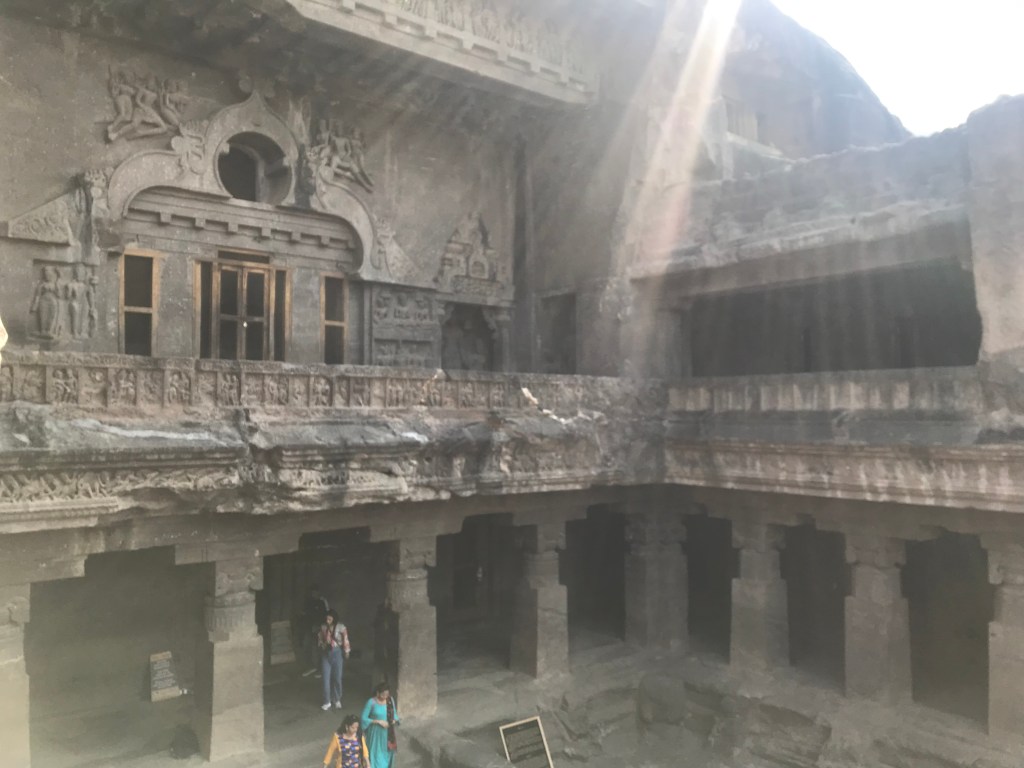
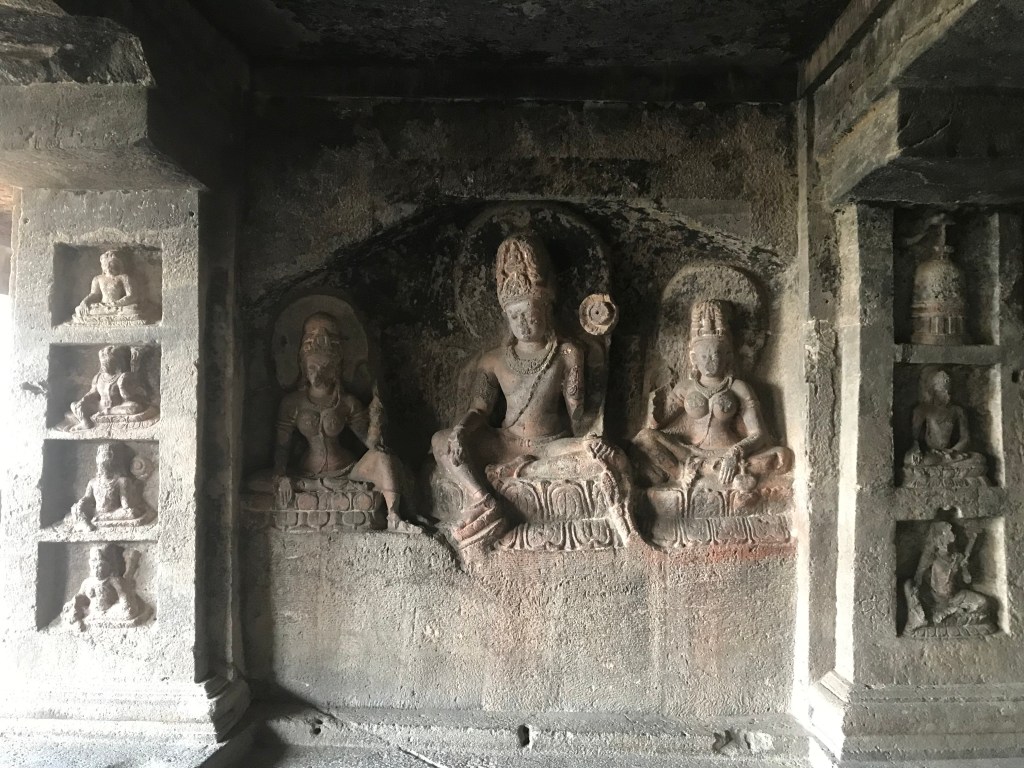
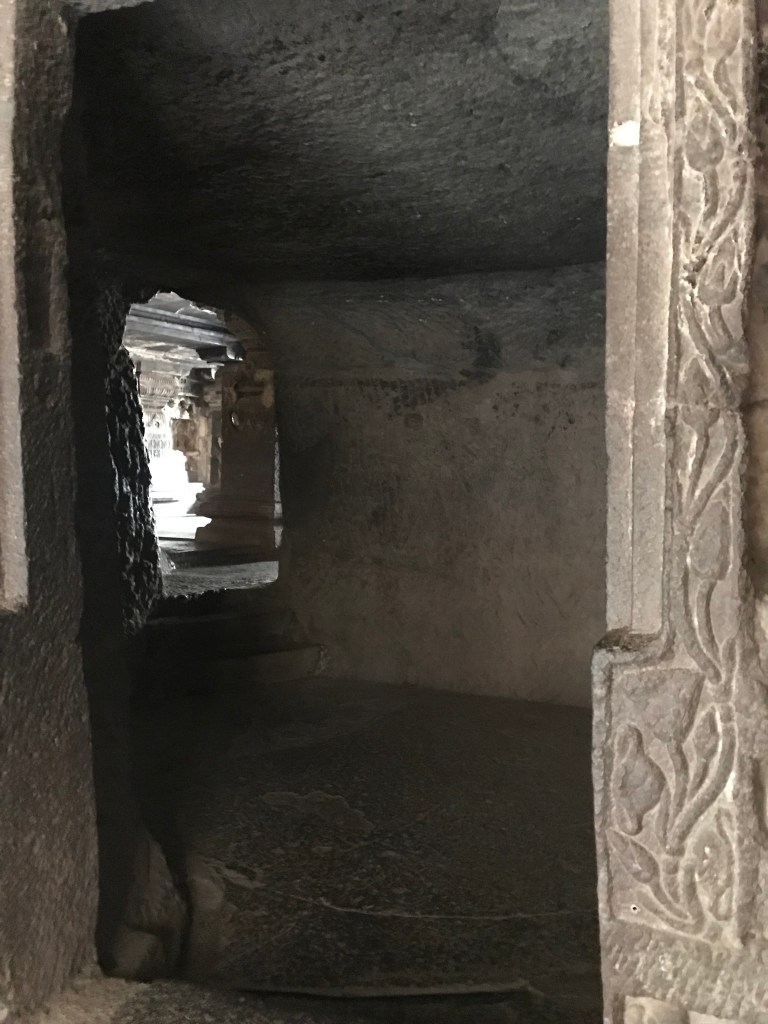
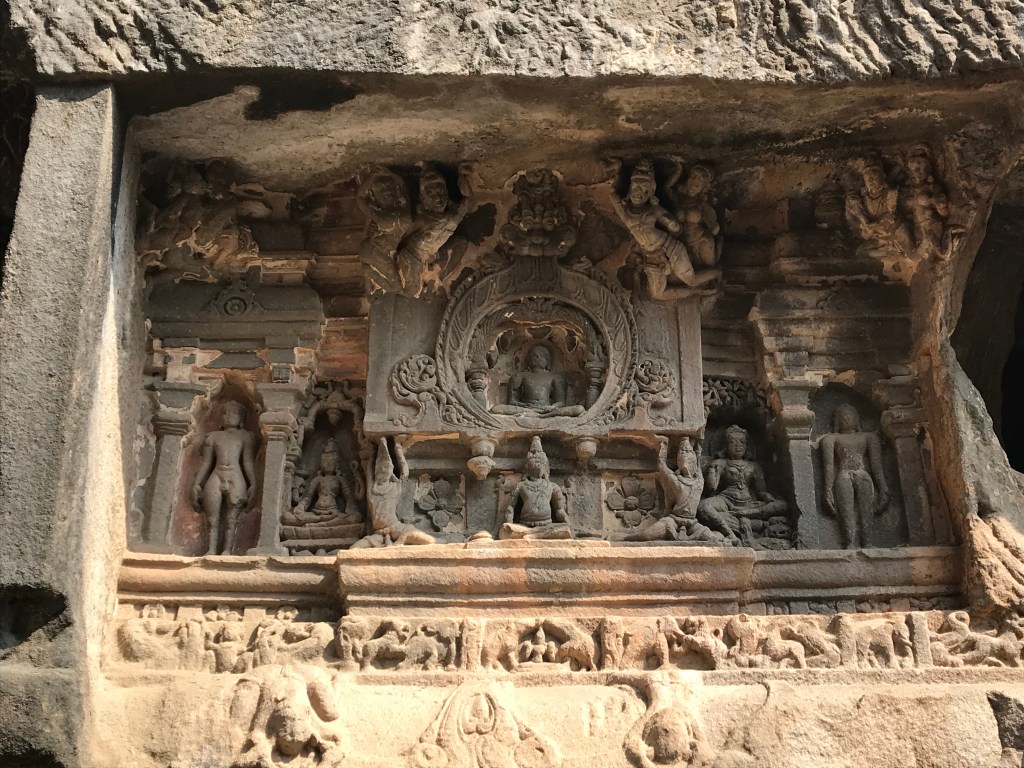
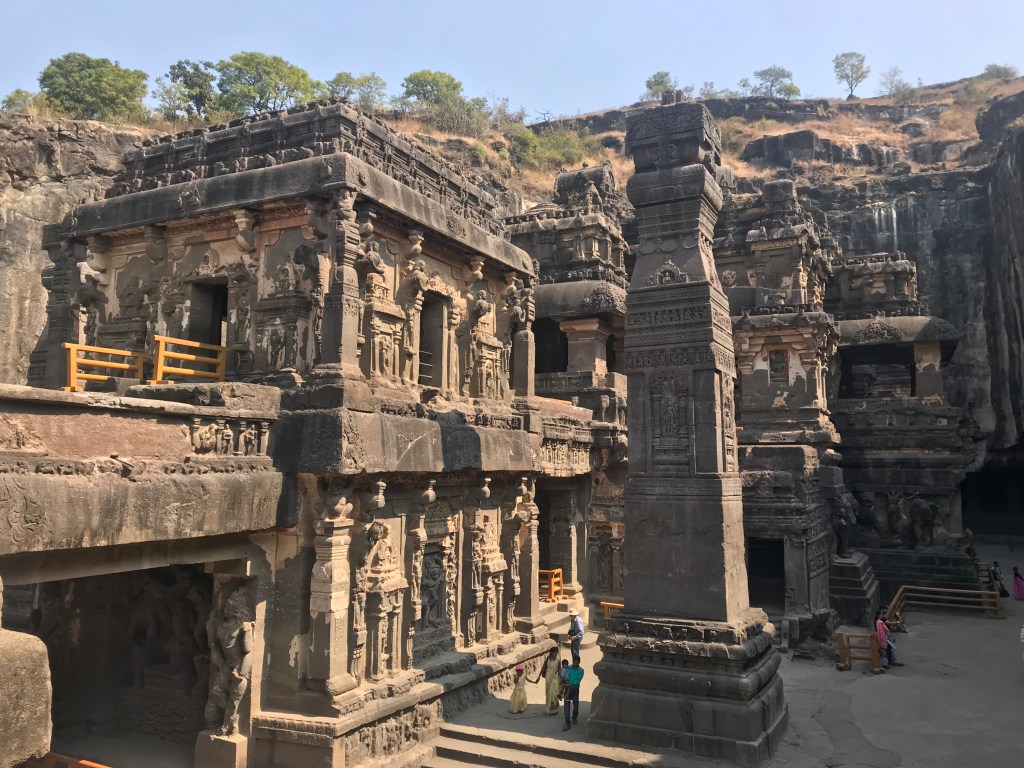
The shining light of not only this cave complex but perhaps of all rock sculpture across the world is the Kailasa Temple. An absolutely mind-blowing undertaking, this massive and ornate temple complex was hewn out of a cliff of living rock, all in one piece. Gargantuan amounts of rock were excavated and then sculpted away, with zero room for error, until all that remains is a temple with multiple floors, rooms, and free standing towers and statues. It really needs to be seen to be believed.
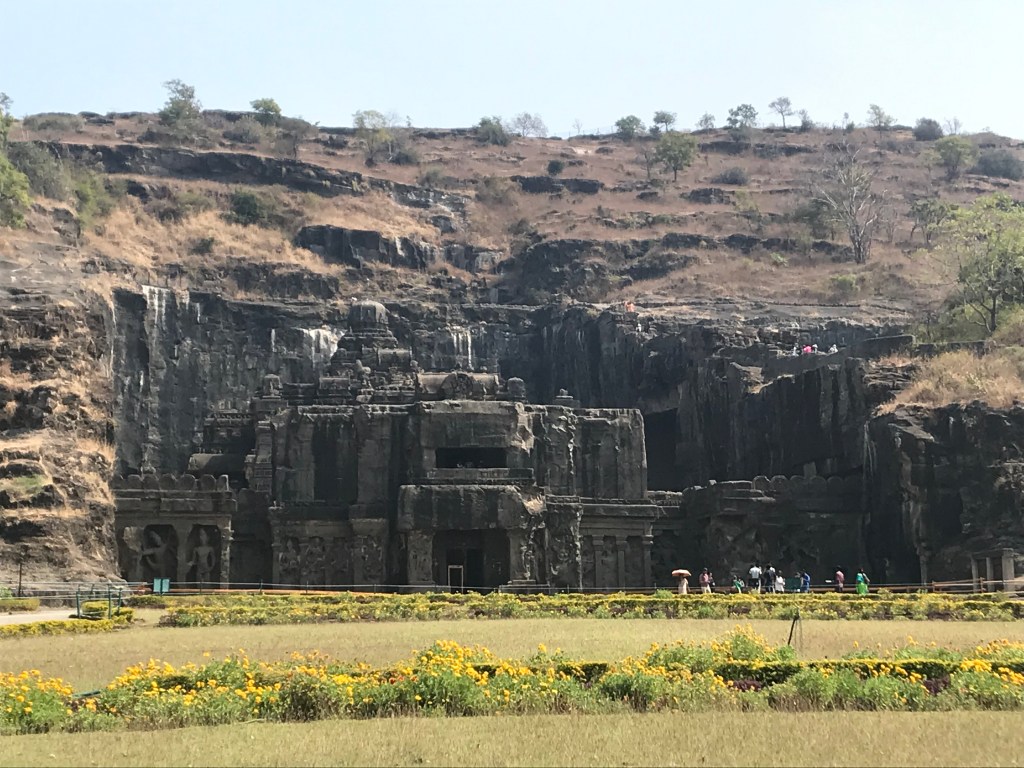
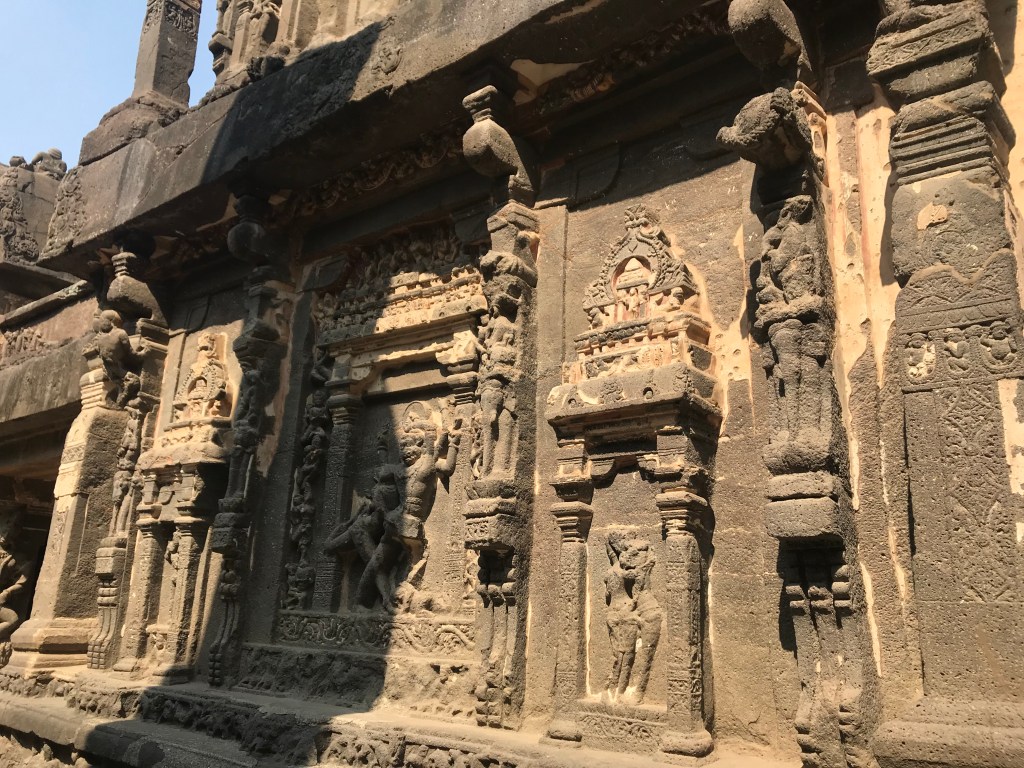
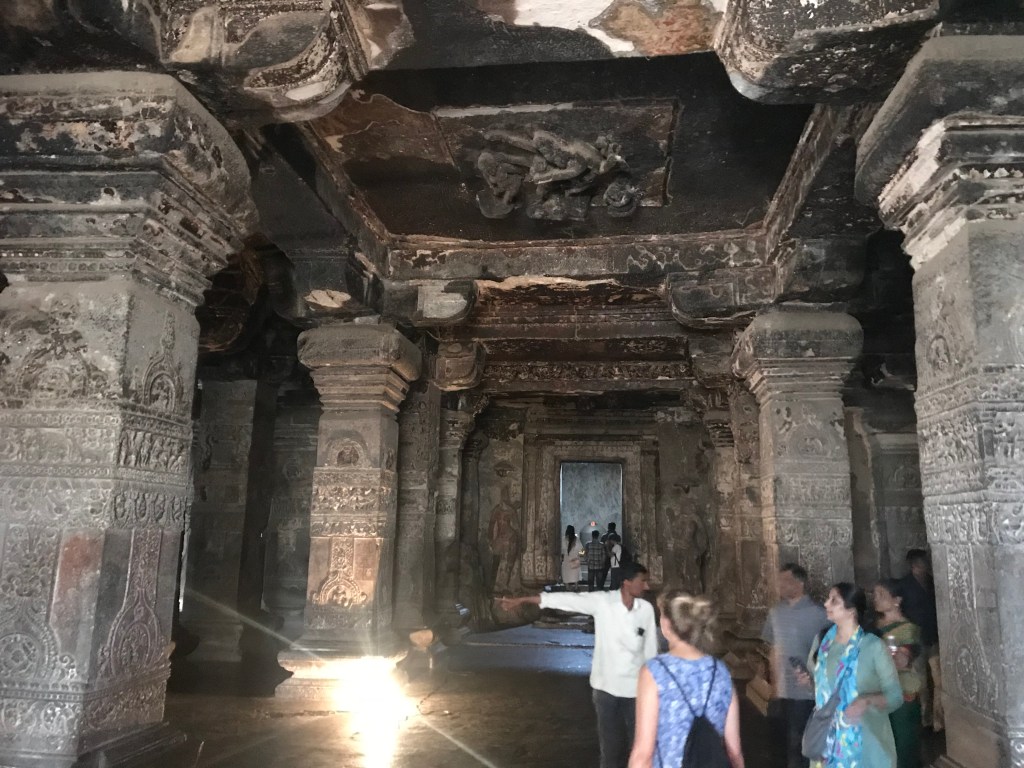
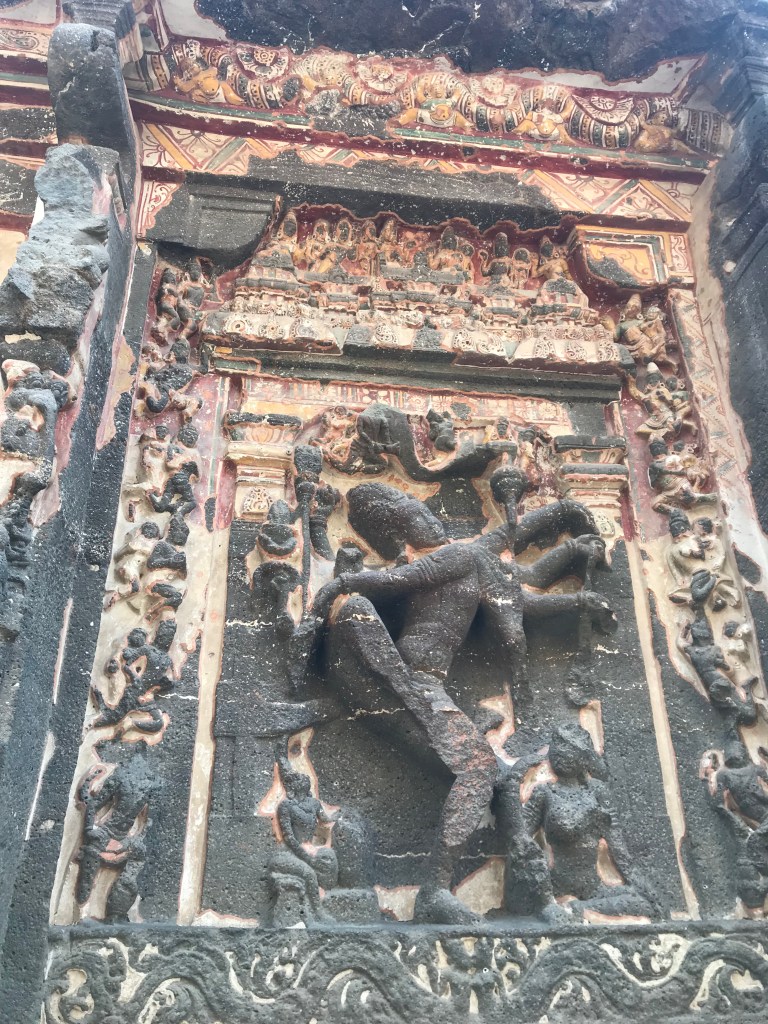
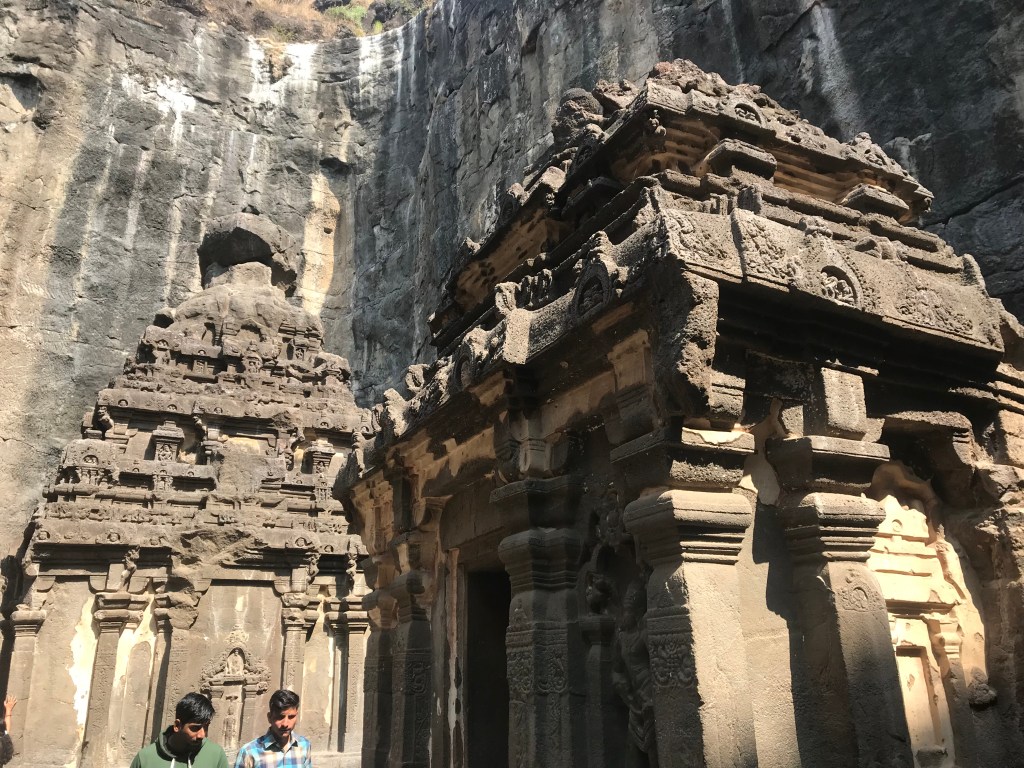
The rest of the grounds of Ellora contain many smaller groups of caves away from the main 34, there’s believed to be around 1000 in total. There’s some really interesting areas for the more spirited explorers to discover.
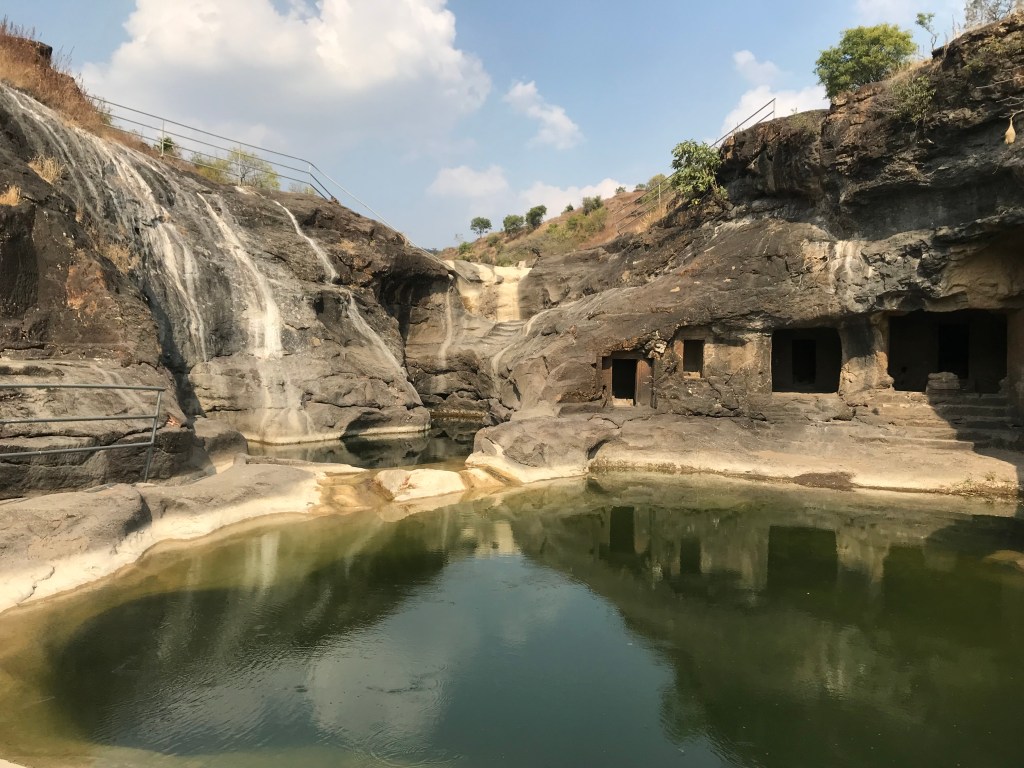
Here’s a link to an imgur page with the full collection of my Ellora pics: https://imgur.com/gallery/d89YdhP
Ajanta
Older than Ellora, 2nd century BCE to 7th century CE, and probably abandoned when Ellora came to prominence, this is a set of exclusively Buddhist caves carved into a sheer cliff face along a stunning river valley.
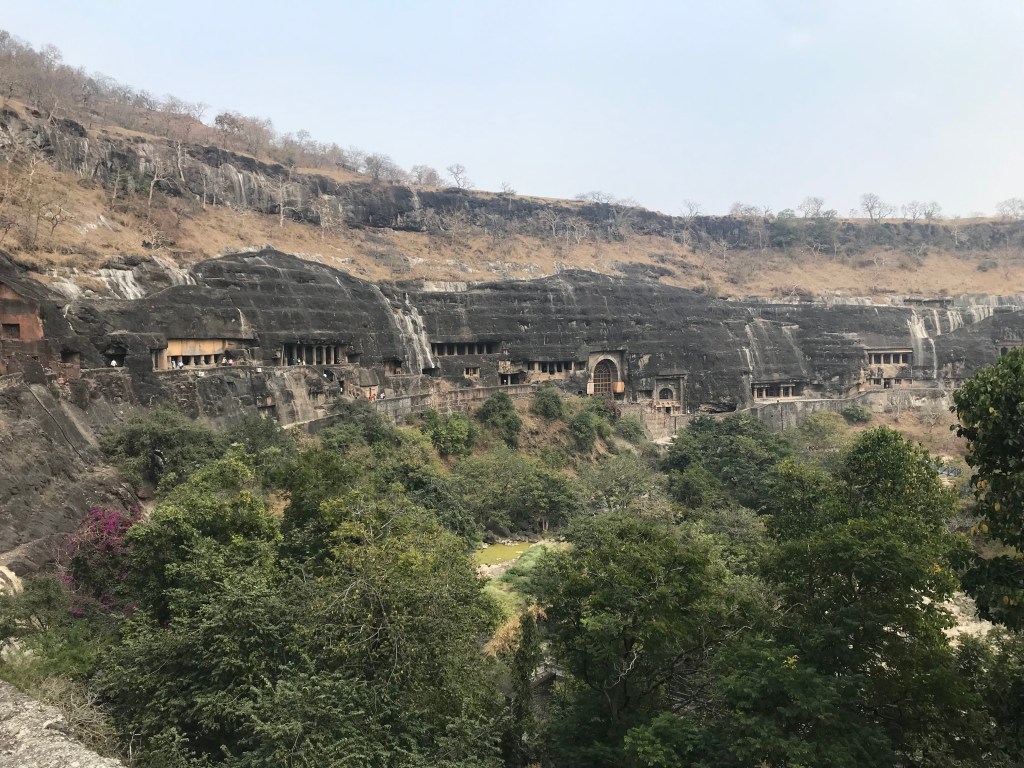
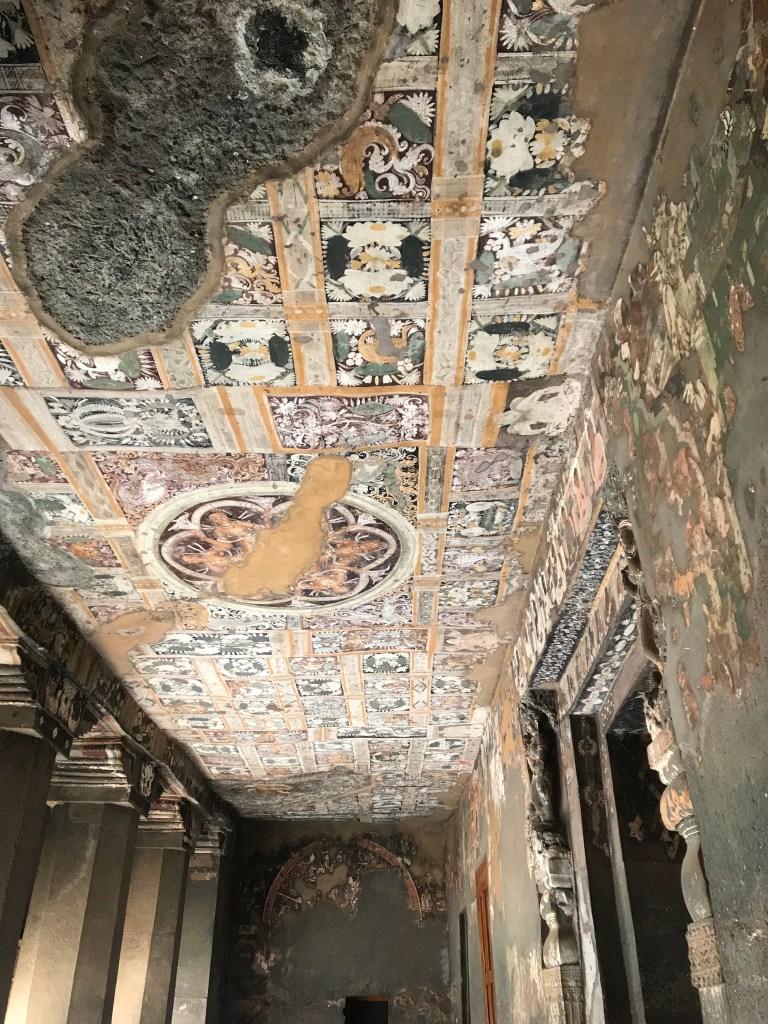
The beauty of these caves is in the surviving paintings (tempera style) adorning the caves. Some of these are remarkably well preserved and they think this may have something to do with the fact that they smeared their work with a cannabis paste afterwards! It’s probably also got something to do with the fact that these caves were lost to history for centuries until accidentally stumbled upon by a British hunting party.
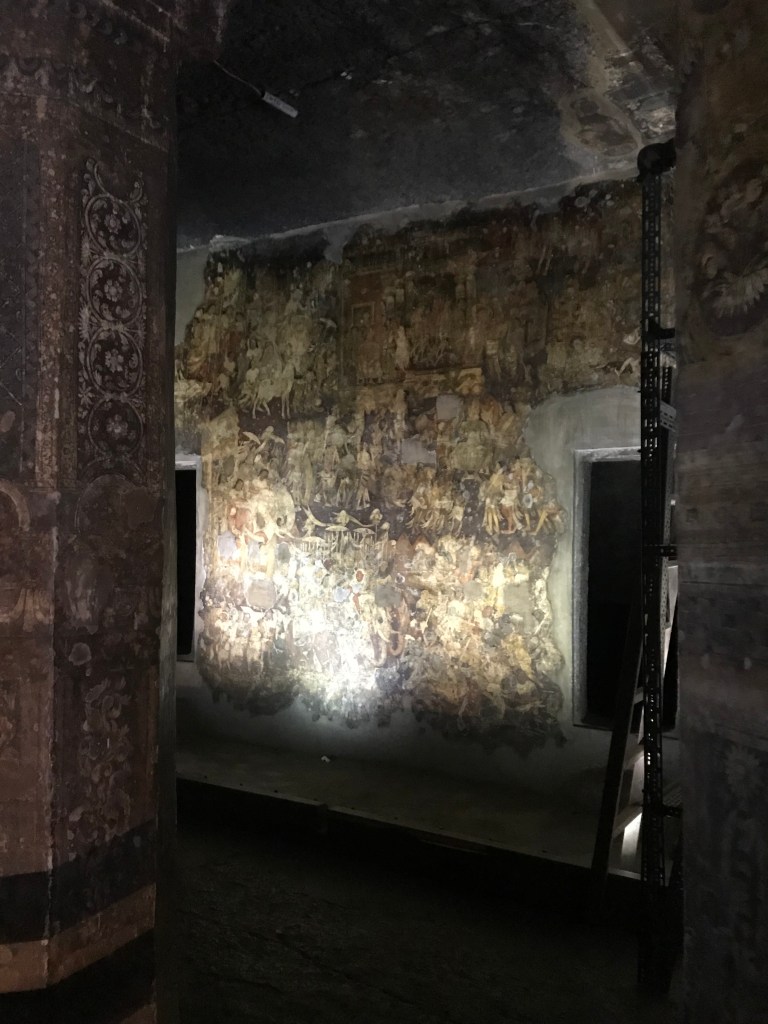
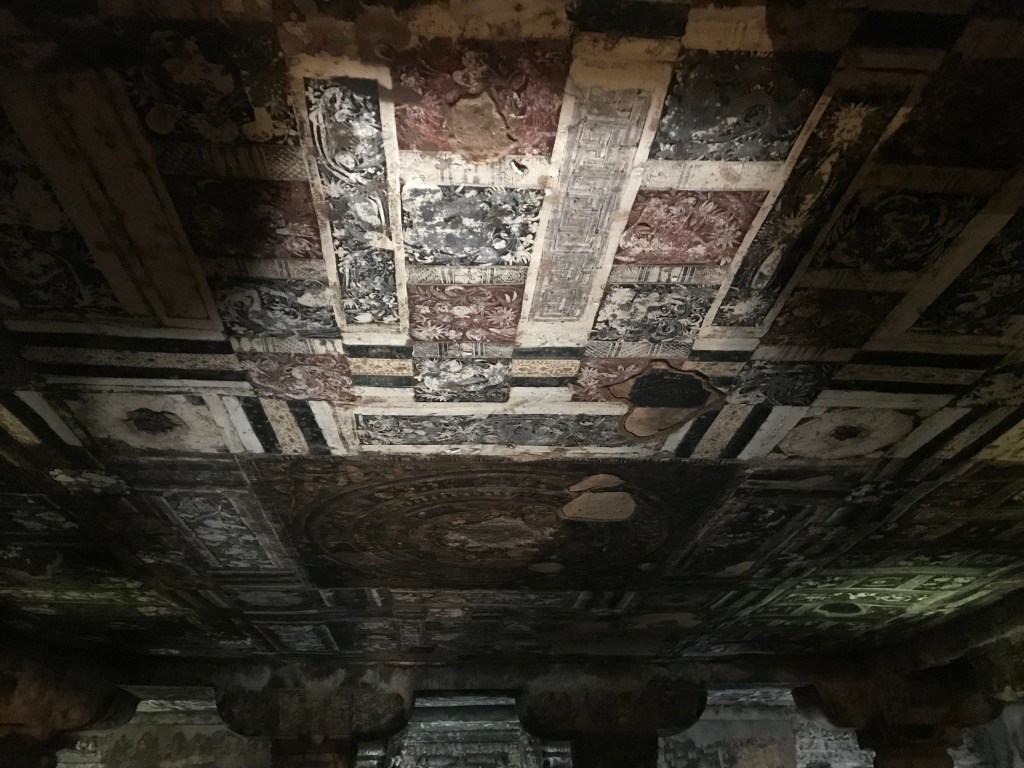
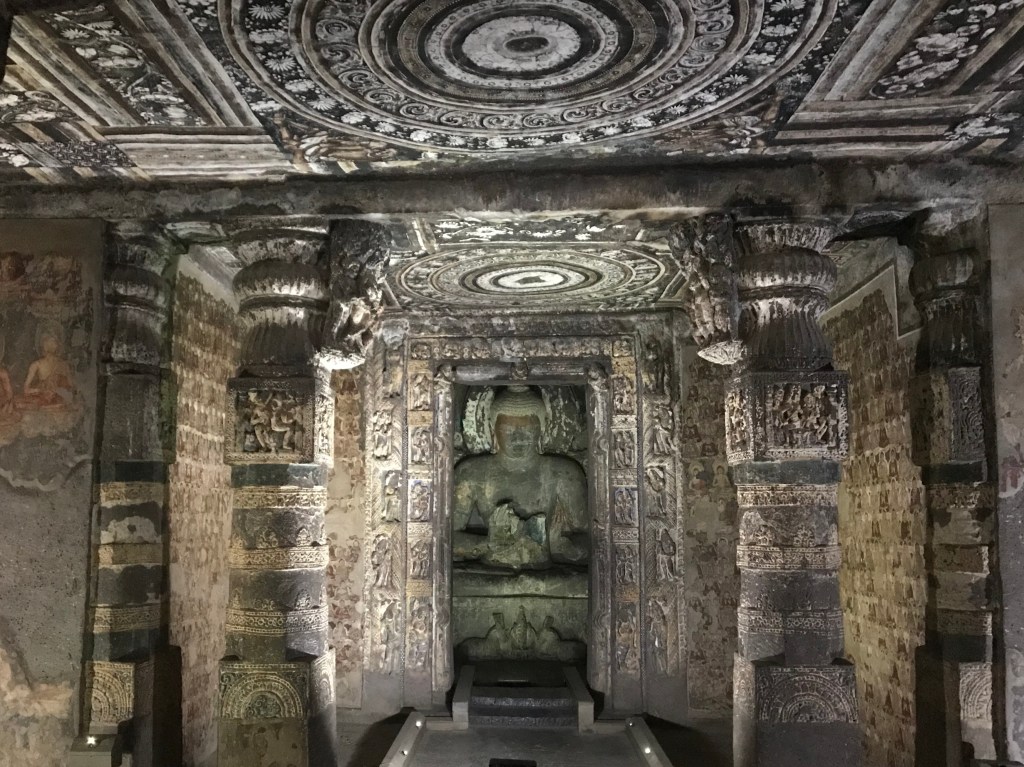
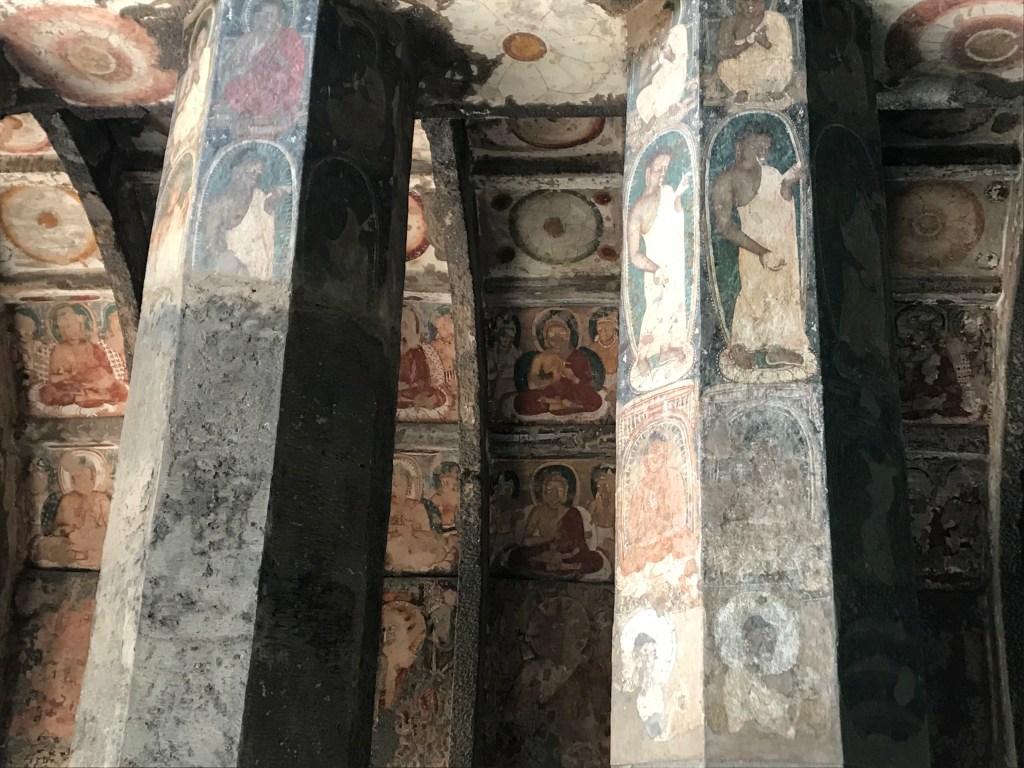
While the carvings here aren’t a patch on Ellora, some of the later caves have some stunning work and the whole complex and setting is an absolute joy to explore.
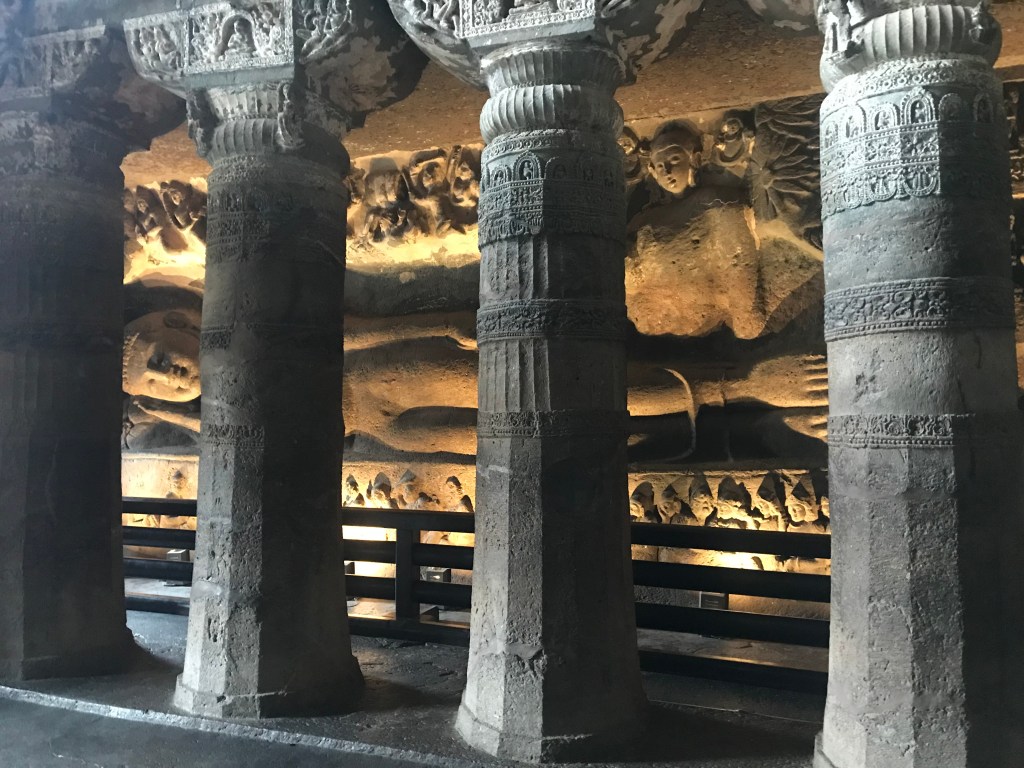
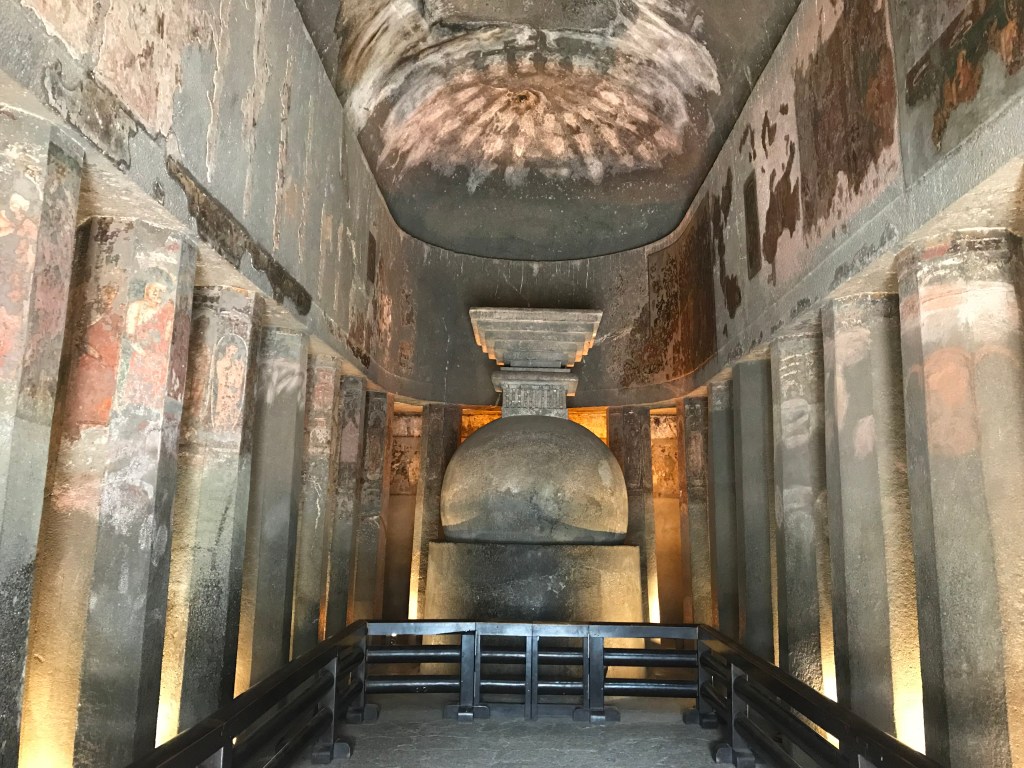
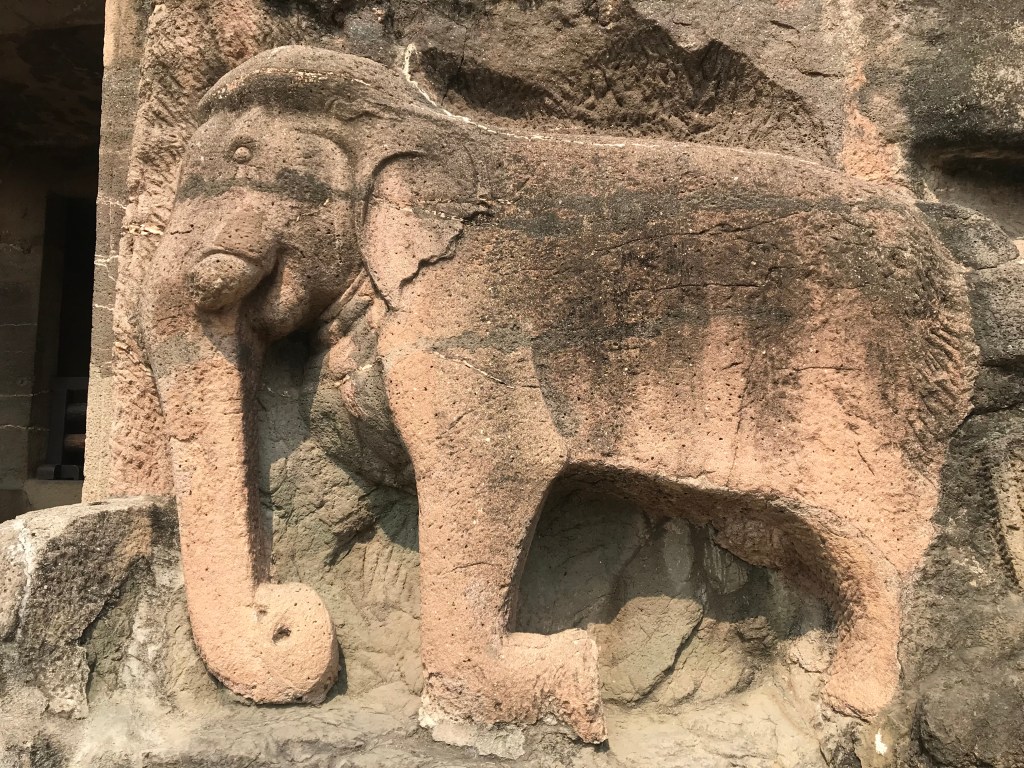
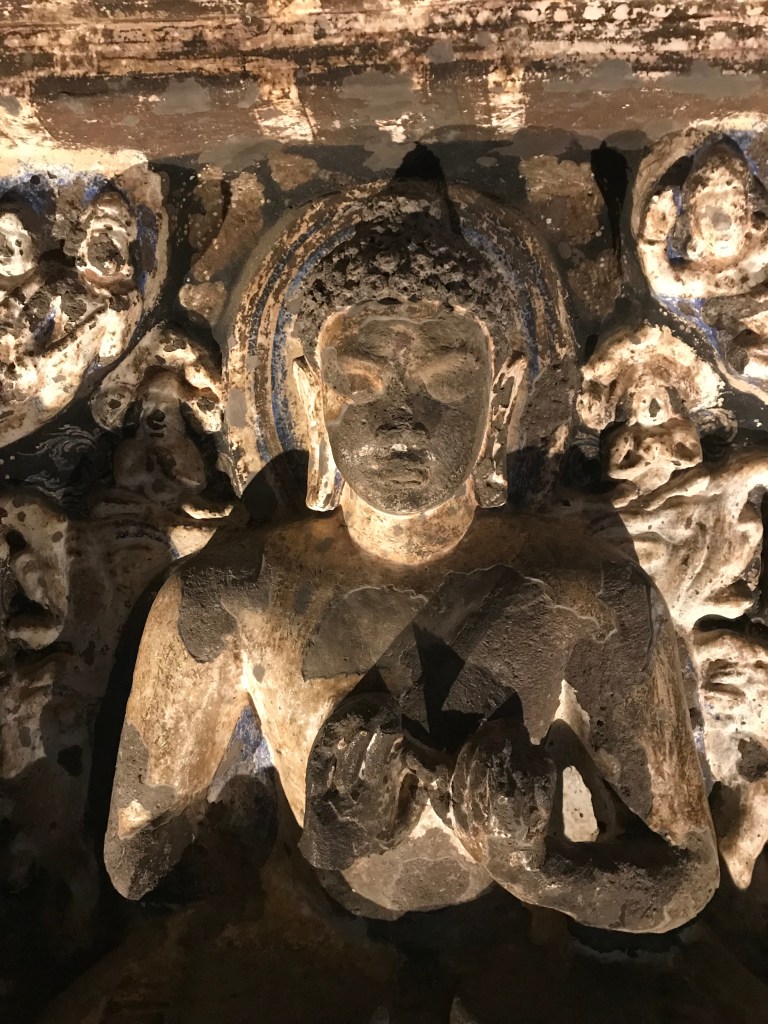
The imagery of the paintings includes Buddha, obviously, alongside animals, nature, patterns, and the odd mythical creature (cow-mermaids anyone?).
Again, here’s the link to an imgur file with the Ajanta pictures: https://imgur.com/gallery/f3AveU2
What if we had more time
Aurangabad is well placed for several attractions, both human and natural, and while we spent 4 days here there were a couple of things we didn’t manage to see.
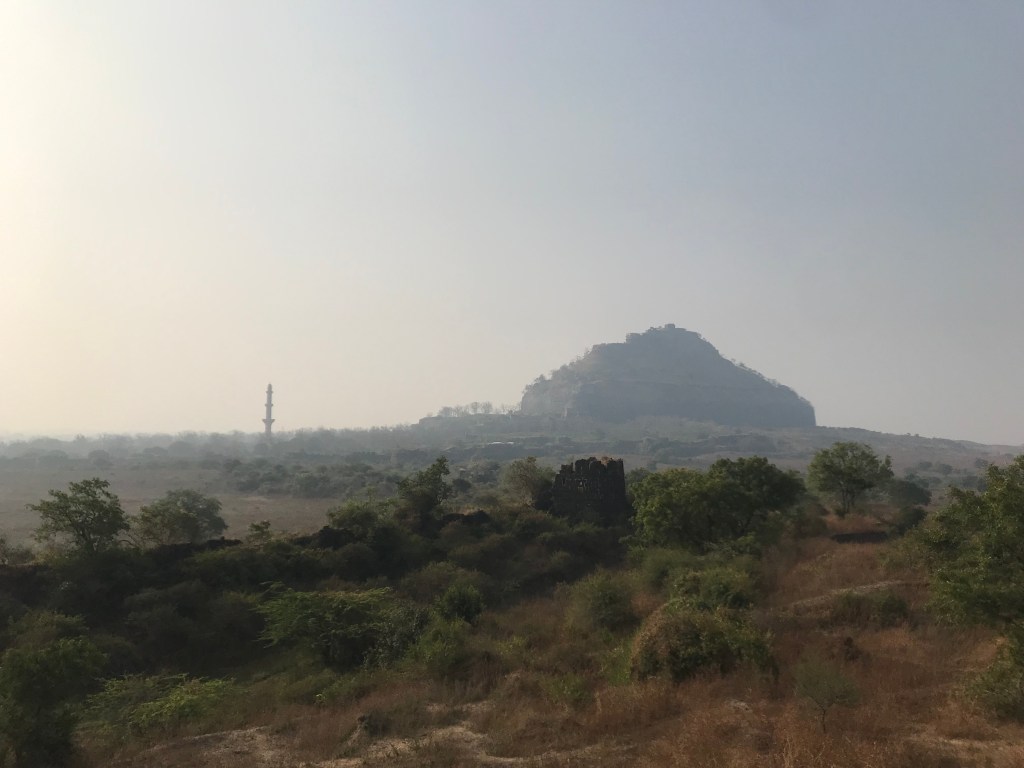
Daulatabad Fort is nearby and is an hour long climb to the top through multiple defensive structures. Sultan Muhammad bin Tughluq relocated his capital here from Delhi, forcing the whole population to march the 1200-odd kilometers. Two years later, due to water shortages, they had abandon Daultabad and they marched the whole way back to Delhi!
The Lonar meteorite crater is kind of close as well and is the worlds largest hypervelocity impact crater in basalt. It’s meant to be a very serene setting, dotted with temples around the crater which is now a lake. The water is supposedly both saline and alkaline an is meant to be restorative. It’s a ten hour round bus trip from Aurangabad though, so we decided against. I’d recommend staying overnight nearby the crater if you’re interested in checking it out.
Pune
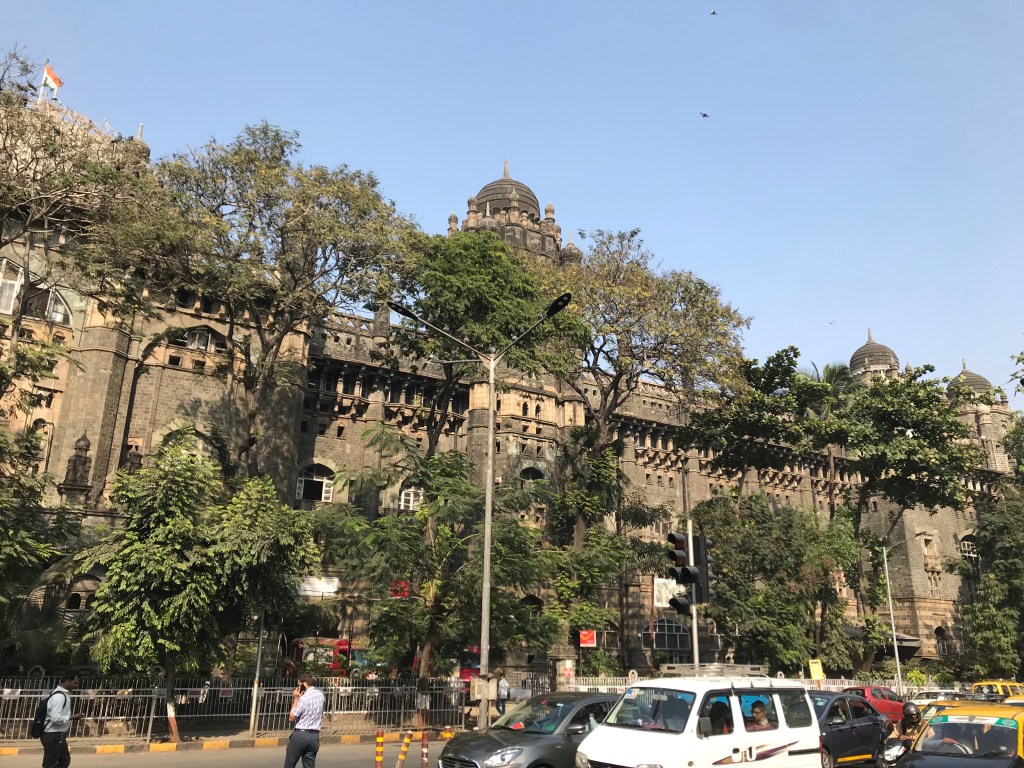
The most modern city in Maharashtra, a beacon of business, education, and shopping. The bright lights and glass facades of much of this city wouldn’t look out of place in the likes of Tokyo and New York.
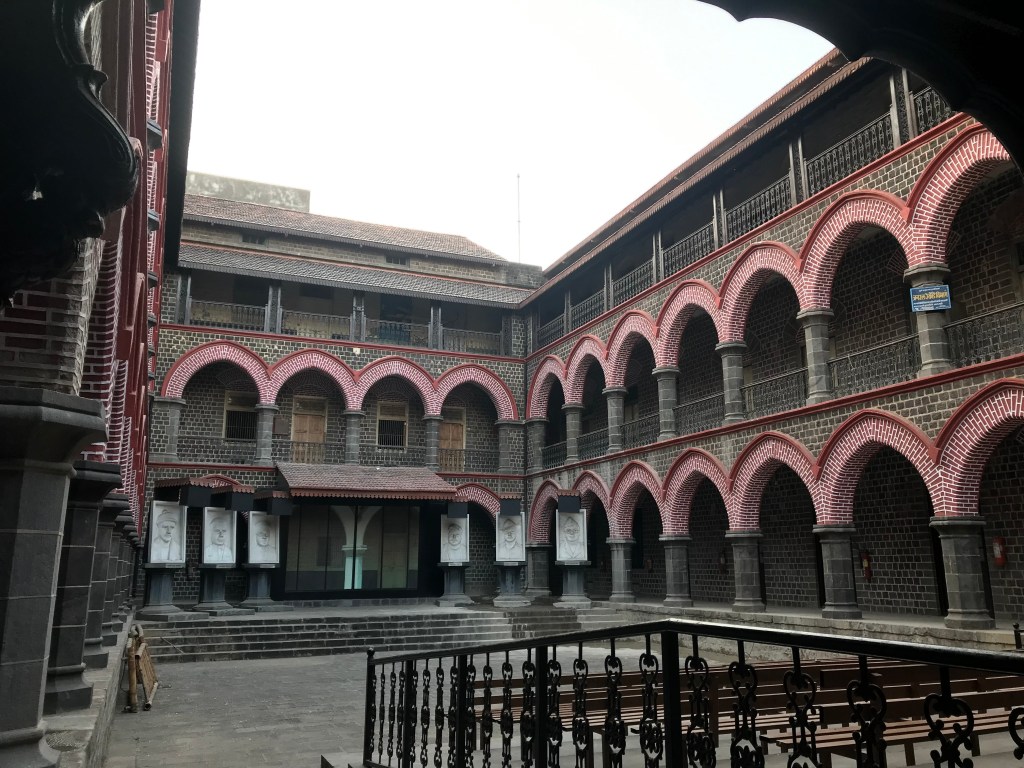
Pune (like many Indian cities) still has its historic core, dominated by the Shaniwar Wada fort in the centre, street bazzars winding down side lanes, centuries old wadas (housing blocks) centered around a courtyard, and shops that have traded since well before independence.
It somehow effortlessly blends traditional spirituality, markets, and Indian life with the shimmering bars and pubs, including a brilliant craft beer scene, super modern apartment and office buildings, and iridescent shopping malls.
One of the most famous places in Pune is the Aga Khan Palace. This was built by Sultan Aga Khan III as a way to employ thousands of workers from the surrounding provinces who were badly hit by famine. This auspicious start to the building didn’t continue however and it later served as prison to Mahatma Ghandi, his wife Kasturba Ghandi, his secretary Mahadev Desai, and the poet and activist Sarojini Naidu.
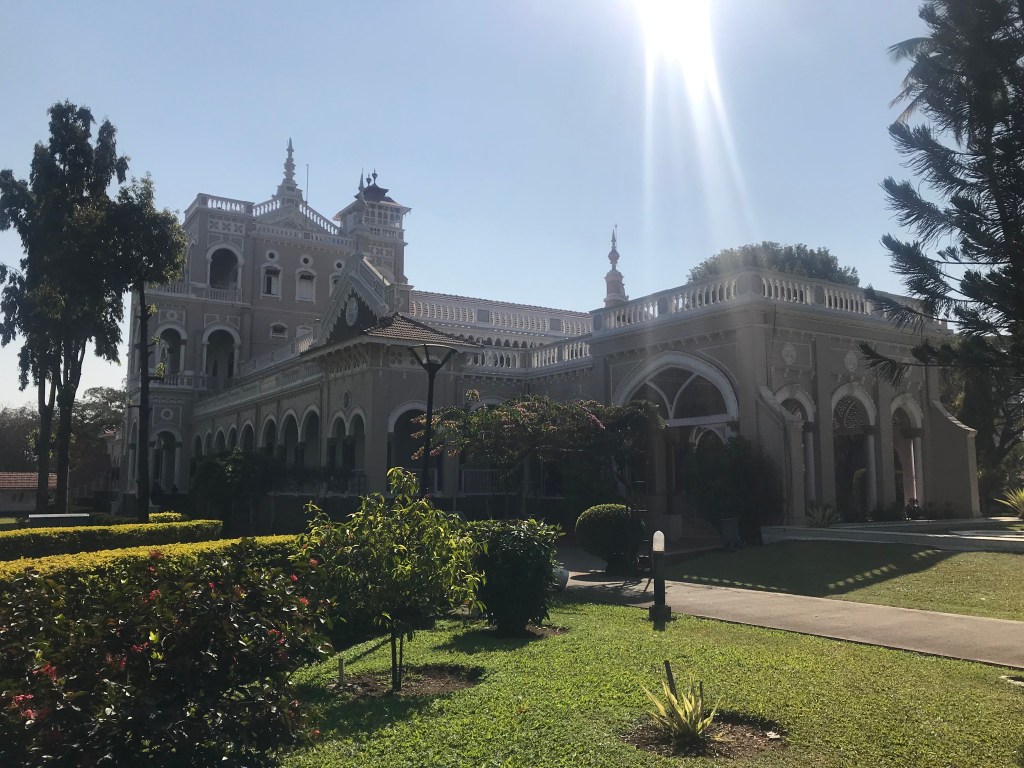
The palace now houses a small museum about Ghandi and his imprisonment, with some sections dedicated to others who helped the cause. Unfortunately, most of the palace isn’t open to the public but the grounds are a calm oasis and enjoyable to explore.
Pune is also well located for day (or half day) trips, including the stunning Sinhagad Fort. All in all, Pune’s had somewhat of a bad rap it really doesn’t deserve.
Sinhagad Fort
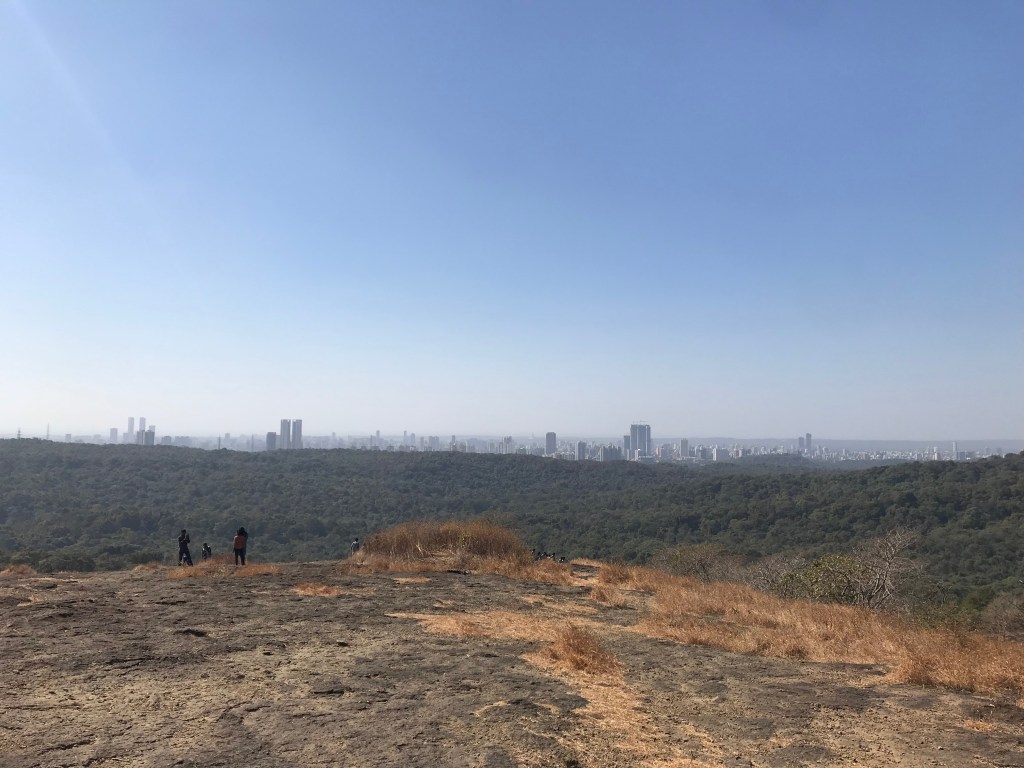
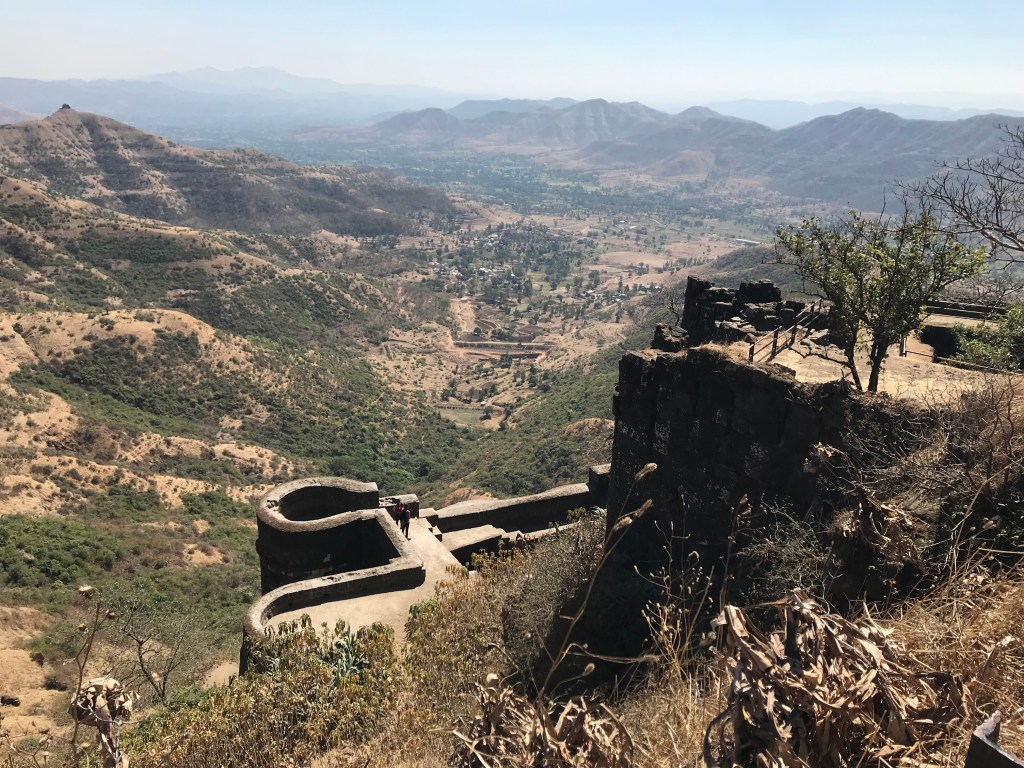
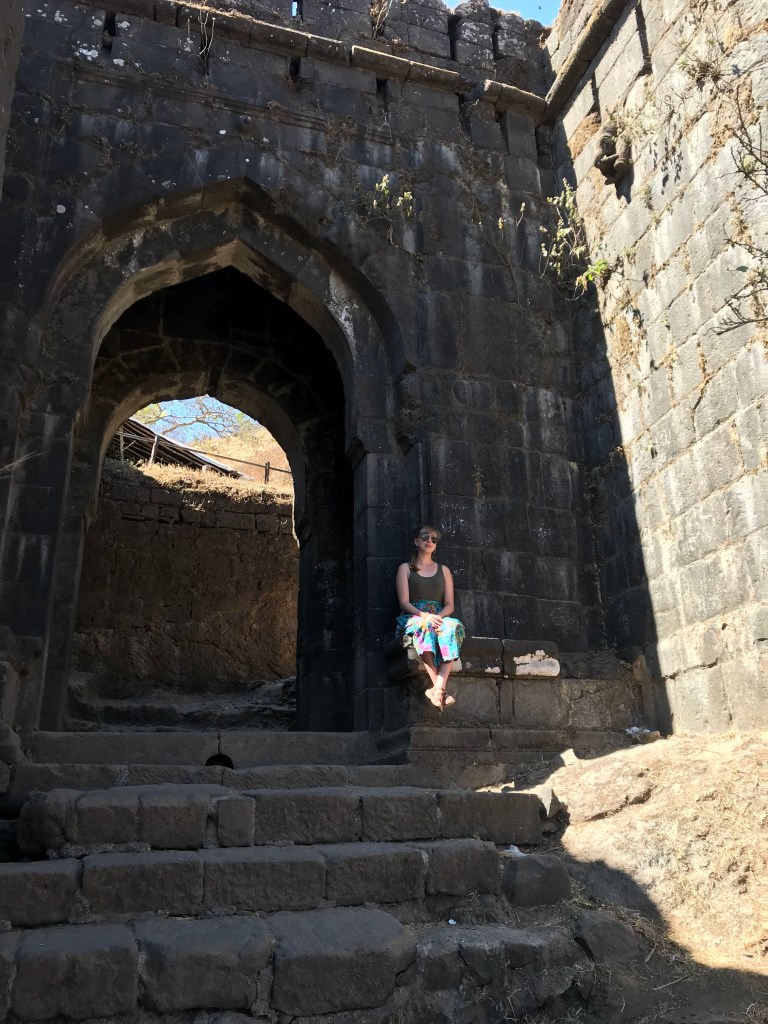
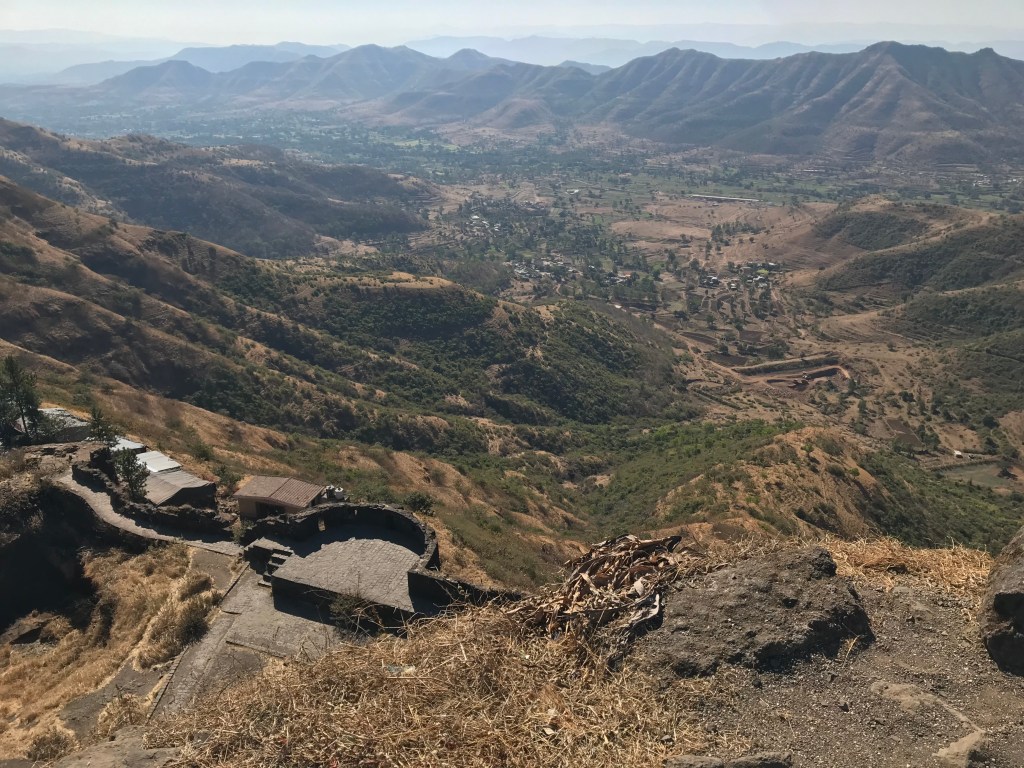
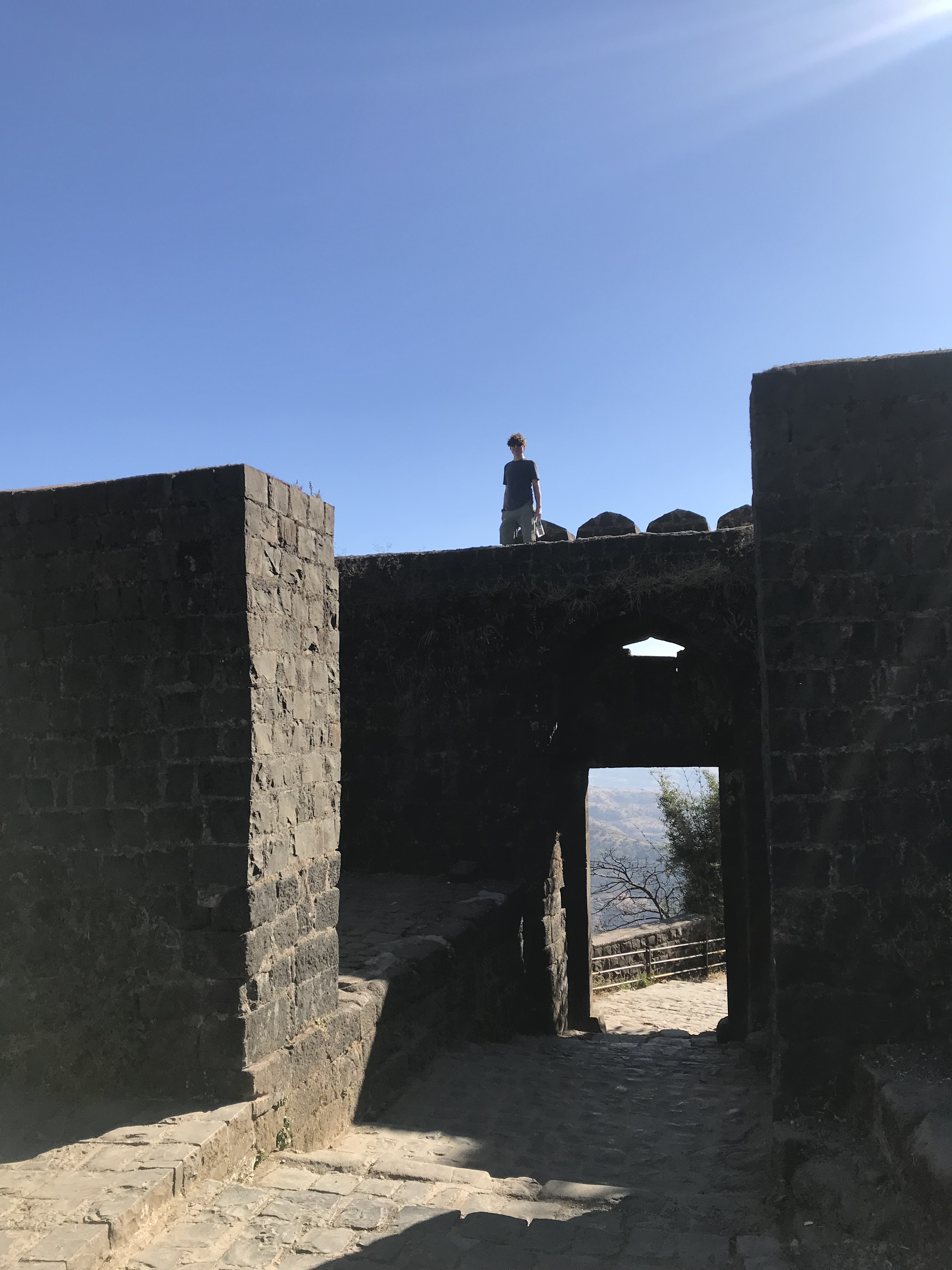
Nestled high up in the mountains, overlooking both Pune and the historic trade route, lies Sinhagad Fort. This fascinating, multi-gated fort held huge strategic importance to many rulers for many centuries.
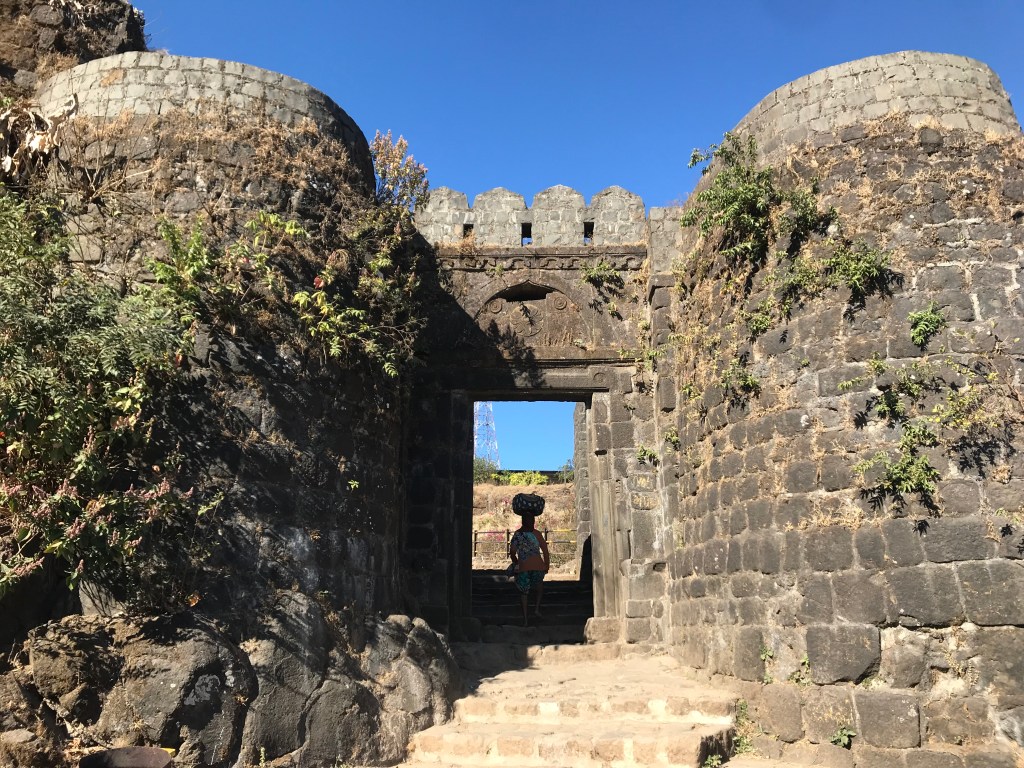
Once you work your way through the defensive elements the fort opens up into a hill-top plateau which has some interesting monuments, including both a temple and a shrine to one of the victims of a battle here, the prince son of an invading warlord. It’s here that we met a group of people carrying out the strangest ritual, we spent ages trying to figure it out before they told us they were playing a game as part of a scavenger hunt!
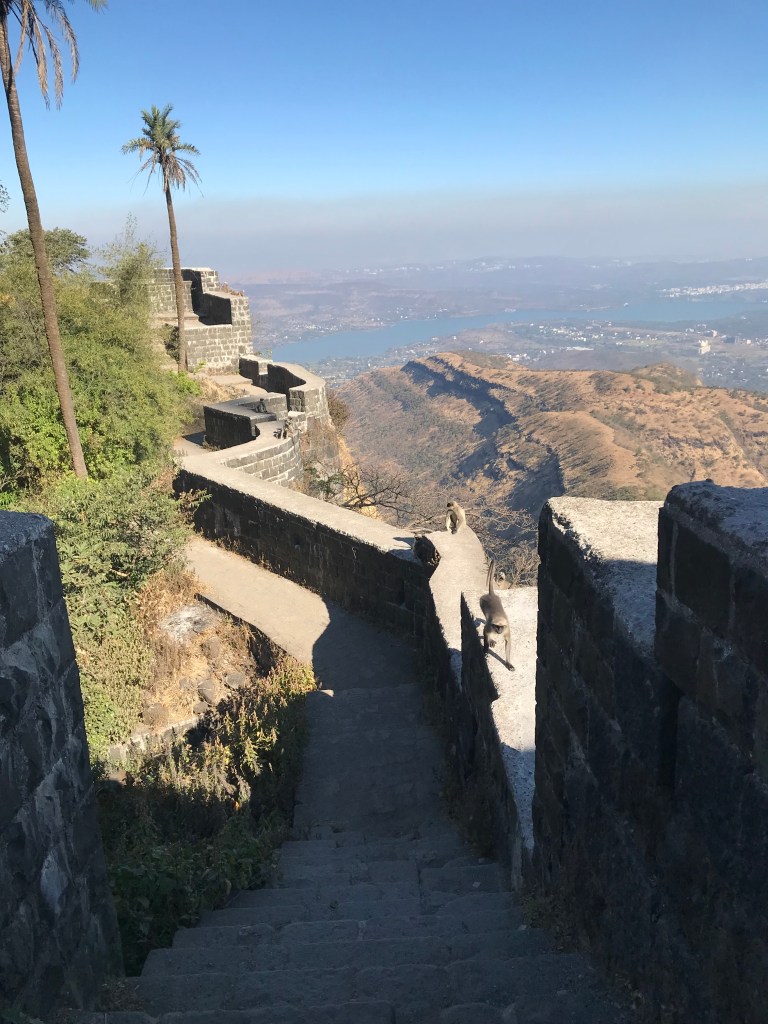
Further exploration reveals a back gate with a suitably treacherous escape route. Well worth a trip for the views alone, which stretch all the way to the horizon.
The beer
Kingfisher,the self crowned king of good times, is ubiquitous across India and, like most local beers, is well suited to the climate. However, there’s a growing craft beer scene challenging Kingfisher’s reign and Pune is a major proponent.
Craft beers here are often wheat beers, again suiting the heat, and offer a crisp, hoppy, and fuller flavoured option. Bira is a good brewery, with a few straight shooting and delicious offerings. Great State are another strong brewery here and their beers have strong fruit led flavours. The trend is catching on and other states are doing well on the craft beer front too. I look forward to trying them!
Family
Megan’s auntie Joanna (well, technically first cousin once removed but that stuff gets complicated) and her family live in Pune so we went to see them. They were very generous and put us up, fed us, and generally took excellent care of us. The family consists of Joanna, her husband Niraj, their twin kids Grace and Reuel, and their dog Sparkle.
We had a lovely time exploring the old city, shopping along MG Road (which I’m told is the place to shop in Pune), exploring the university campus where Niraj works, and enjoying a wide range of delicious food with them. It was also great to get a locals view of the city, which included getting a look into the wada I mentioned earlier (although they don’t live there).
They’d recently been over to the UK to visit Megan’s family, in December no less, so we had a good time comparing India and England. Suffice to say, the weather came up a lot! We also came to the conclusion that we had explored each other’s home countries more than our own.
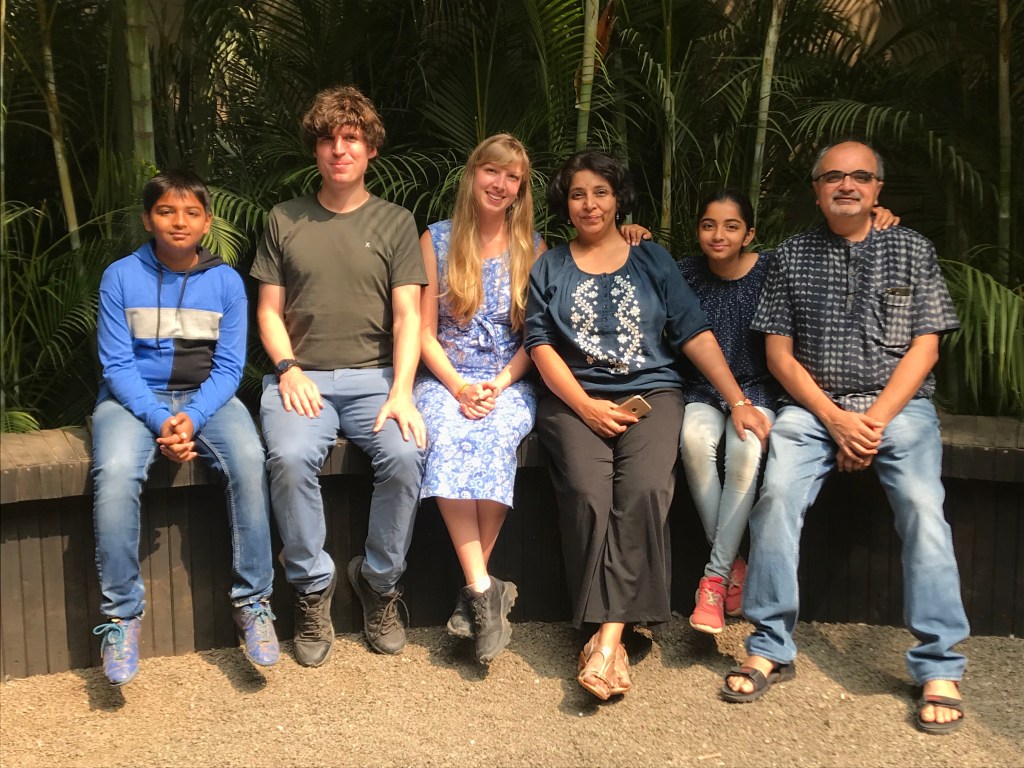
While we weren’t in Pune long, it was really great to meet them and to spend the precious time we did have with them. Next time we come to India one thing is for sure, we’ll be spending a lot more time in Pune with these guys!
Travel
(Trains, no planes, but automobiles)
Given the size of Maharastra, getting around is surprisingly accessible. Most inter-city trains are super long distance services that you catch for part of their journey. For example, the train we caught to Goa (Pune – Margao, 15 hours) had come from Delhi, a 36 hour total trip!
Buses are equally important here, travelling routes that trains don’t or offering cheaper alternatives. They often tend to take roughly the same time as well! We took buses between Aurangabad and Ellora and Ajanta and, as long as you have a seat, the service is fine and very cheap (roughly 50p). We also caught a longer distance bus to Pune. We’d opted for the cheaper local bus and the hard seats, multiple stops (including half an hour for the drivers to eat lunch!), and crowding made it less enjoyable. In hindsight, paying more for a nicer coach may have been a good idea!
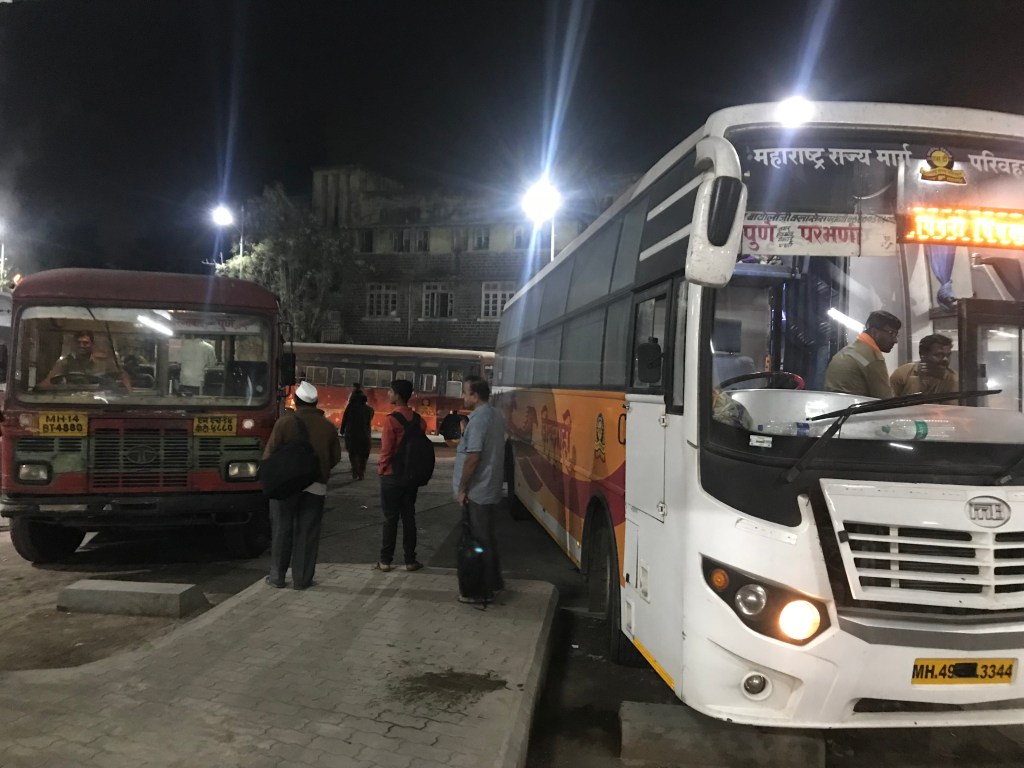
Preferring them in the UK , we tended to catch trains where available. The trains have different classes you can book and being on a budget we are definitely not going 1st Class! They tend to get booked up way in advance so book as early as possible. Thankfully, they have a tourist quota on trains that doesn’t sell out quite as quickly but booking a week or more in advance is still recommended.
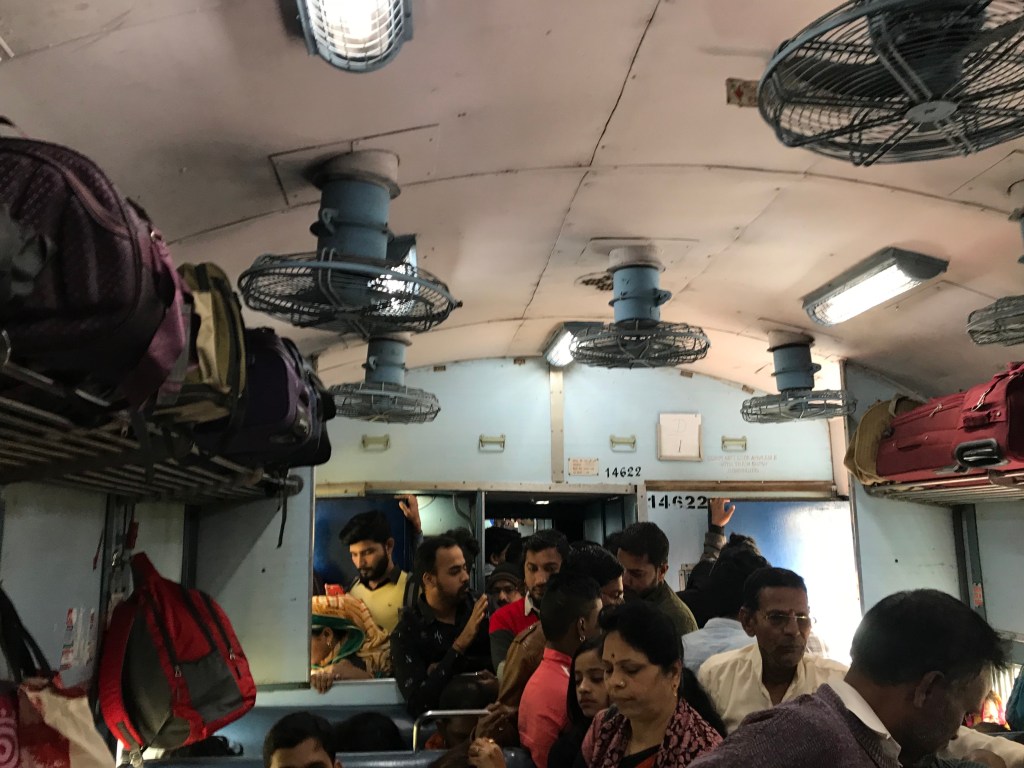
For the shorter journeys we travelled in the 2nd Class Chair section. This is basically the equivalent to normal class UK trains. Fortunately we had seats reserved as this section can get extremely popular!
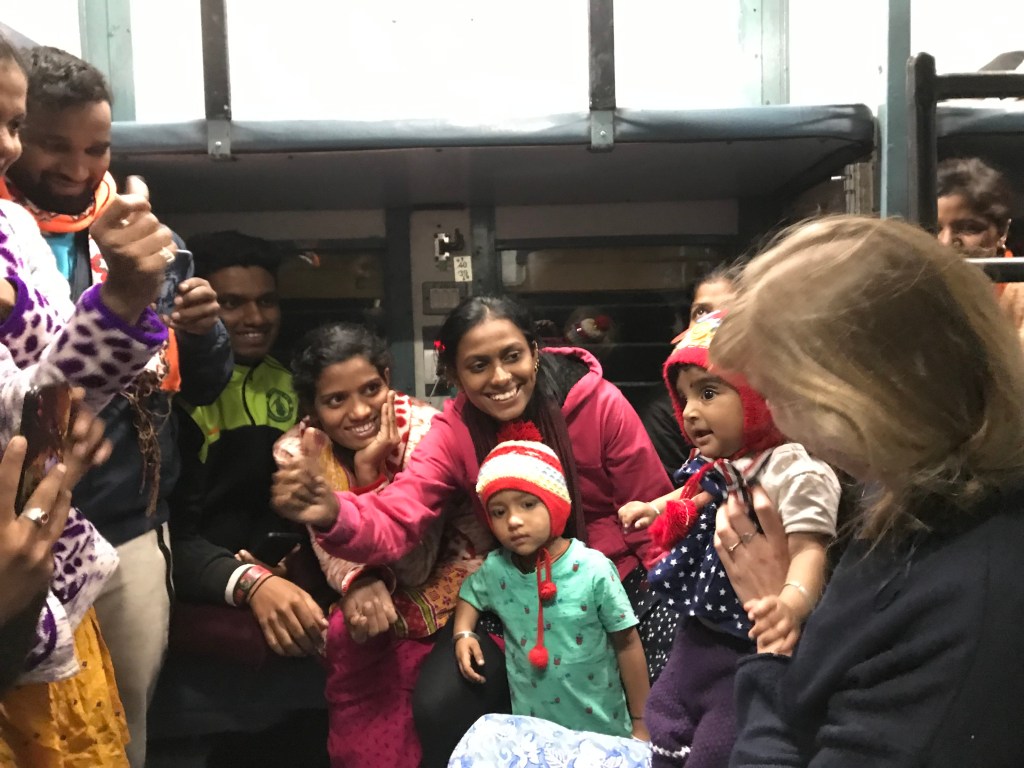
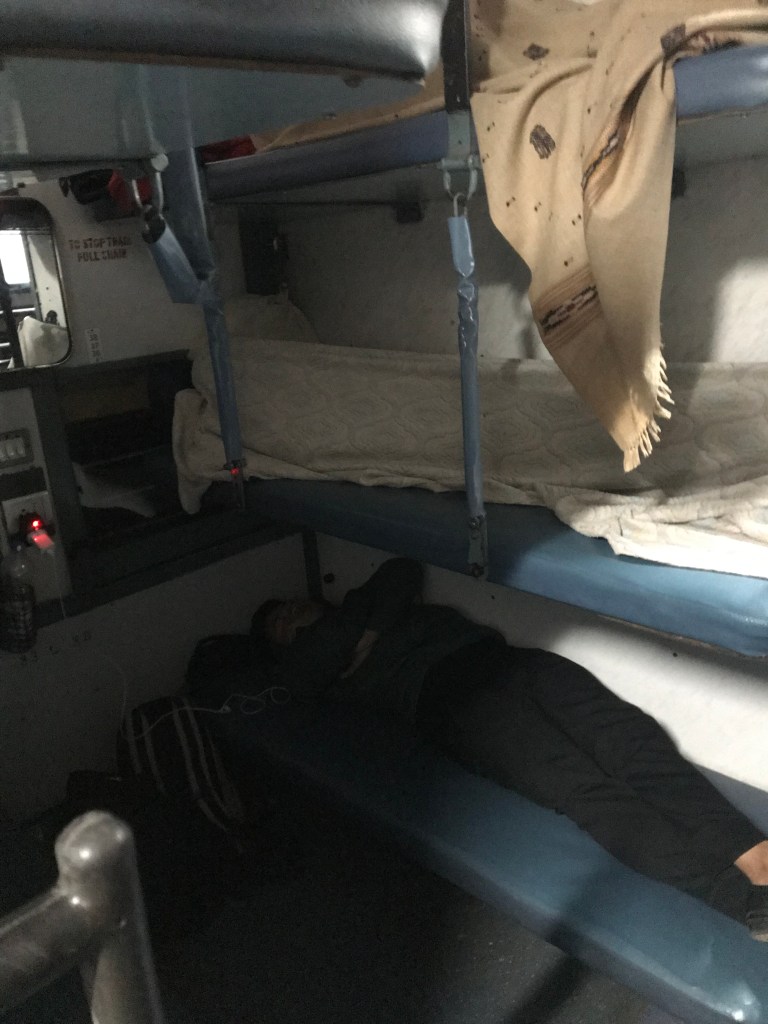
For the longer journeys we went in the Sleeper Class, where the benches cleverly fold out into 3-storey bunk buds. These areas are open and so can have a communal feel to them. While everyone has a reserved seat/bed, often people come and go between them to have a chat and meet others. Megan proved very popular here, particularly with the mothers and babies!
Our Highlights
Maharashtra, like Mumbai, was an almost non-stop ride of sights, sounds, and scenery. While there was the occasional rest day thrown in (trust me, you need them in India), picking highlights from the rest of the days is tough.
- The main highlight for us has to be meeting/seeing Megan’s family in Pune. It was such a special few days and we had such a good time with them.
- Ajanta was another of the highlights for us. While the work at Ellora may be more stunning, and nothing compares to the Kailasa Temple, we found that we much preferred exploring Ajanta. The setting is so serene, it’s less busy, and the paintings and artwork are so unlike anywhere else.
- Our third highlight from our time in Maharashtra is Sinhagad Fort. In hindsight our focus had been on caves over forts and it was really special for us to get to visit such an important one. We had so much fun exploring the ruins and the views were just magical.
What if we had more time?
With Maharashtra being so huge, it’s impossible to do everything. Naturally, there’s a wealth of things we could have done if we’d had longer here.
The main area we’d have explored is the Konkan coast. While we chose to go inland, to the East, you can catch the train South along the coast. It’s called the Konkan railway and was such a challenging undertaking that the British, while they ruled here, deemed it impossible and left it to India to complete after Independence. There’s countless stops along the way to explore but one in particular is worth visiting, the fortress of Murud-Janjira. This is a fort built off the coast and which was so well designed that it was never conquered.
Another area we would have loved to go to is the Taboda-Andheri tiger reserve. It’s Maharashtra’s oldest and largest national park and is supposedly one of the best places to see tigers in India. It’s way over to the East though, so you’d need to make a special trip, but that means it gets much less visitors (up to 60% less than other parks) meaning you’d feel more alone.
The other major thing we’d have done more of is the forts! We went cave crazy while out here, and while they are exceptional and we thoroughly enjoyed them we think in hindsight we would have balanced them with more forts. There’s many to choose from so wherever you go in Maharashtra, make sure you get some fort action!